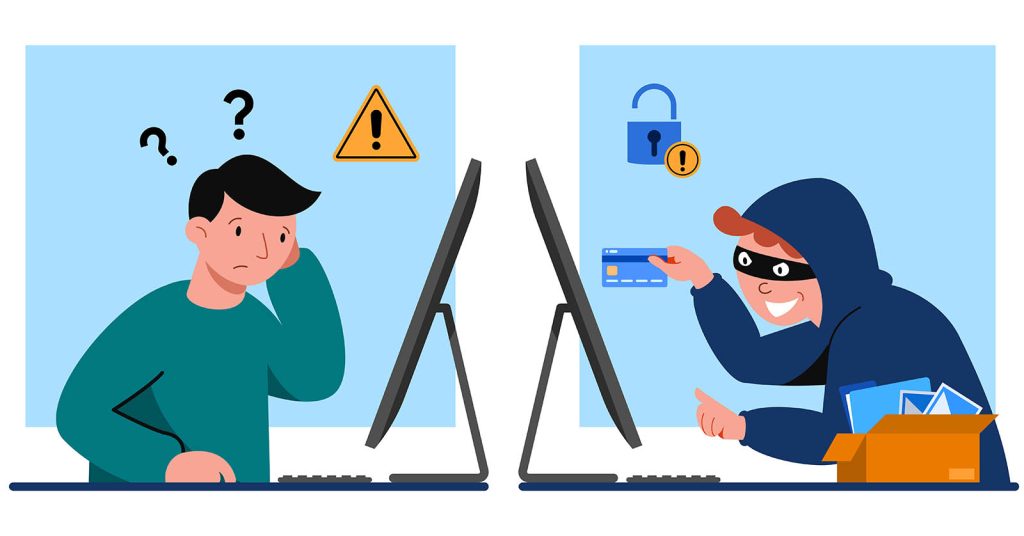
Scams work because the borrower needs certainty at exactly the moment a fraudster is willing to promise it. Promises such as “guaranteed approval,” “funds today,” and “bad credit accepted” can make verification feel like an obstacle instead of protection.
Strong verification separates a real creditor from an impersonator, broker scam, fake-check scheme, or legal but dangerously expensive offer.
Key Takeaways
- Advance-fee guarantees are a major red flag: Federal telemarketing rules specifically restrict that combination.
- Check the entity, not the logo: Caller ID, websites, and email branding can be spoofed or copied.
- Payment method matters: Gift cards, crypto, and wire transfers are common in fraud because recovery can be difficult.
- High cost and fraud are different problems: A legal loan can still be financially harmful even when the lender is real.
- Move quickly after exposure: Contact the bank or payment provider, secure compromised accounts, and report identity theft or fraud.
Understand the Difference Between a Scam and a Bad Loan
Some offers are outright fraud: no lender exists, no money will ever arrive, and the only objective is to steal a fee or personal information. Other offers involve real credit with extreme rates, expensive add-ons, weak underwriting, or aggressive collection terms.
Both can damage a household, but the response is different. Fraud requires account security, reporting, and payment-recovery steps. Real high-cost credit requires a contract and affordability analysis.
| Offer | What may be happening | Best first response |
|---|---|---|
| “Guaranteed loan—pay a processing fee first” | Possible advance-fee scam | Stop and verify independently |
| Real lender, very high APR | Potentially legal high-cost credit | Compare state law, disclosures, and safer alternatives |
| Message uses a bank’s name but unfamiliar link | Possible impersonation/phishing | Contact the bank through its known website or phone number |
| Check is deposited, then you must send part back | Fake-check/overpayment scam | Do not return money; contact the bank |
Common Loan Scam Patterns
Advance-fee scams promise certainty before underwriting
Classic advance-fee schemes often target borrowers who expect rejection because of poor credit, low income, or previous financial problems. Sellers may promise a loan or claim approval is highly likely, then demand money for “insurance,” “processing,” “taxes,” “verification,” or a security deposit.
The federal Telemarketing Sales Rule draws an important distinction. In covered telemarketing, a seller or telemarketer that guarantees or represents a high likelihood of obtaining credit cannot request or accept payment until the promised extension of credit is obtained.
Upfront timing alone does not make every fee illegal. Creditors can legitimately charge application, appraisal, or other disclosed fees in transactions where no prohibited guarantee or high-likelihood representation is made. Context matters.
Impersonators can look like real banks and lenders
Fraudsters can copy a lender’s logo, register a similar domain, spoof caller ID, or send messages that contain information already associated with the borrower. None of those details proves that the communication came from the real company.
Common impersonation patterns include:
- Domains that add a word or substitute a character in the real lender’s address.
- Spoofed phone numbers that display the bank’s name but route to the scammer.
- Social-media profiles using the lender’s branding.
- An email claiming a loan was pre-approved even though no application was submitted.
- Fake “government loan department” names or official-looking seals.
End the conversation and contact the company through a source you already trust: a statement, saved banking app, regulator listing, or the lender’s independently located website.
Fake-check and overpayment schemes create a second loss
Scammers may send a check, make a mobile deposit, or claim that loan proceeds have been placed in the borrower’s account. Victims are then told to send part of the money back for insurance, broker fees, equipment, or “verification.”
Funds appearing in an account are not the same as final settlement of a check. Account balances can appear available before the bank discovers that the item is fraudulent. When the check is reversed later, money the victim already sent may be gone while the bank removes the bad deposit.
Legitimate lending does not require borrowers to return part of a newly deposited loan by gift card or cryptocurrency to prove the account works.
Unusual account access is a serious warning sign
Lenders may legitimately request financial documents, bank-account information for funding or repayment, and authorization for credit checks. Those requests are different from asking for a banking password, one-time authentication code, or remote control of the borrower’s computer or phone.
Do not install remote-access software at the direction of an unsolicited lender. Sharing a login or multifactor-authentication code can let a fraudster move money, change account settings, or defeat security controls.
Income verification tools sometimes connect to financial accounts through authorized providers, but the consumer should understand which service is being used and what access is granted. Salespeople demanding the password directly are not using the same process.
Guaranteed approval and “no questions asked” deserve scrutiny
Real underwriting varies by product. Some lenders serve borrowers with damaged credit or use alternative data, but legitimate credit decisions still depend on eligibility, identity, income, repayment capacity, collateral, or other underwriting criteria.
Claims such as “everyone approved,” “no income needed,” or “your bankruptcy does not matter—we guarantee funding” can signal that the seller’s real objective is an upfront payment rather than a sustainable loan.
Prequalification is different from final approval. Preliminary offers can change after the lender verifies the application, credit, income, collateral, or other information.
How to Vet a Lender Before Applying
- Find the legal business name. Marketing brands and broker names can differ from the entity making the loan.
- Verify licensing or registration. State regulators and NMLS Consumer Access can help with many mortgage and nonbank lending entities, although coverage depends on lender type.
- Use independently found contact information. Do not verify a suspicious message using the phone number or link inside that same message.
- Read the privacy and disclosure pages. Missing or incoherent legal information is a warning sign, especially when sensitive data is requested.
- Ask about the credit inquiry. Confirm whether preliminary shopping uses a soft inquiry or whether a hard inquiry is required.
- Review APR and cost disclosures. Compare the actual contract, not only a marketing payment.
- Check complaint patterns carefully. Reviews can be manipulated, but repeated reports of unauthorized withdrawals or advance-fee promises deserve attention.
HTTPS encryption is necessary for transmitting sensitive information, but the padlock does not prove that a business is legitimate. Scam websites can also obtain valid security certificates.
High APR Is Not Proof of Fraud
Triple-digit APRs can be severe financial warnings without automatically proving the lender is fake or acting illegally. State usury and small-loan laws vary, and federal rules can apply to particular products or borrowers.
That distinction matters because a borrower facing a real high-cost contract may still owe a valid debt and may need help with repayment, while a fraud victim should focus on stopping payments to the scammer and securing compromised accounts.
Anyone considering payday, title, or other very high-cost credit should compare lower-cost alternatives before signing.
Loan Brokers and Lead Forms Can Create a Different Privacy Risk
Not every site advertising “loans for bad credit” is the lender that will make the credit decision. Some pages collect an application and sell or route the lead to lenders, brokers, or marketing partners.
Lead generation is not automatically fraudulent, but borrowers should know who receives Social Security numbers, income details, phone numbers, and bank information. Vague privacy policies that authorize sharing with broad categories of “partners” can result in repeated marketing calls even when no useful loan offer appears.
Before completing a form, identify whether the company is a lender, broker, marketplace, or lead generator. Look for the legal entity name, how compensation works, which information is shared, and whether submitting the form authorizes multiple credit inquiries or marketing contacts.
Be especially cautious when a page promises a single “application” but never identifies the lenders that may receive the data. Convenience is valuable only when the borrower understands the network on the other side of the form.
Read the Loan Agreement for Product-Switching and Add-On Problems
Fraud can begin with an imaginary loan, but a legitimate lender or broker can also create problems by selling a product that differs materially from the advertisement.
Compare the final documents with the original offer. Look for:
- Different loan amount or repayment term
- An APR far above the preliminary range
- Mandatory insurance or membership charges that were described as optional
- Collateral requirements that were not disclosed in the sales pitch
- Automatic refinancing or renewal provisions
- Payment authorization broader than expected
- Broker fees or referral charges that change the economics
Underwriting can legitimately alter pricing after verification, so changed offers are not necessarily scams. Pressure to sign before understanding the new terms—or claims that optional products are mandatory—is the real concern.
Keep screenshots of important advertised terms until the transaction is complete. They can help document a material mismatch if a dispute later arises.
Student Loan and Debt-Relief Pitches Often Borrow Government Credibility
Some loan scams do not offer new credit at all. Instead, they claim to refinance, consolidate, forgive, or “unlock” relief on existing debt while using government-like branding.
Federal student loan borrowers can access official repayment, consolidation, and forgiveness information through StudentAid.gov and their assigned federal servicer. Companies asking for a StudentAid.gov password or charging for “exclusive access” to a federal program deserve immediate scrutiny.
Debt-relief companies are a separate category from lenders. Covered for-profit services sold through telemarketing face federal restrictions on collecting fees before specified results, creditor agreement, and payment conditions are met. Sales pitches may use the word “loan” or “consolidation” even when the actual product is settlement, so identify exactly what the company will do with existing creditor payments.
What to Do After Sending Money to a Suspected Scammer
Recovery depends heavily on payment method and speed. Contact the company that moved the money immediately and report the transaction as fraud.
- Credit or debit card: call the issuer and ask about disputing the fraudulent charge.
- Bank transfer or unauthorized debit: contact the bank’s fraud department promptly.
- Wire transfer: ask the bank or transfer company whether the transaction can still be recalled.
- Payment app: report the transaction to the app and any linked bank or card issuer.
- Gift card: contact the issuer, keep the card and receipt, and report the scam.
- Cryptocurrency: report the transaction to the exchange or service used; recovery can be difficult.
Preserve messages, phone numbers, payment receipts, account details, screenshots, and the website address. Those records can help a bank, regulator, or law-enforcement investigation.
Protect Your Identity If Personal Information Was Exposed
Stolen Social Security numbers, driver’s-license images, bank logins, or authentication codes can create problems even when no money was sent.
Change compromised passwords immediately and replace reused passwords on other accounts. Contact financial institutions whose information was exposed, review recent transactions, and consider credit freezes with Equifax, Experian, and TransUnion when identity theft risk is significant.
IdentityTheft.gov can generate a recovery plan for U.S. consumers. Reports can also be filed through ReportFraud.ftc.gov and with relevant state regulators or attorneys general.
When a Real Loan Still Deserves Legal or Counseling Help
Outside assistance can also be useful when the lender is real. Real loans can still raise questions about unlawful terms, licensing, unauthorized debits, deceptive marketing, collection threats, or state rate limits.
Consumer-law attorneys and legal-aid organizations can evaluate legal rights when a lender or collector may have violated the law. Nonprofit credit counseling can help when the larger problem is that several valid debts no longer fit the budget.
Court papers should never be ignored while a borrower is investigating the lender. Disputing the company’s behavior does not automatically stop a lawsuit deadline.
Frequently Asked Questions (FAQs)
Do real lenders ever charge fees before a loan is funded?
They can. Legitimate transactions may include disclosed application, appraisal, or other charges. Major scam signals include a guarantee or claim of highly likely approval paired with an advance payment demand—especially through unusual payment methods.
How can I verify a loan text or email from my bank?
Do not use the message’s link or phone number. Open the bank’s normal app, visit a bookmarked official site, or call the number on an existing statement and ask whether the communication is genuine.
Is a very high APR automatically a scam?
No. High-cost credit can be real, although it may be extremely risky or restricted by applicable law. Verify the lender and then evaluate APR, fees, repayment structure, and alternatives separately.
Can I cancel a loan after signing?
Cancellation rights depend on the product and law. Certain transactions have specific rescission or cancellation rules, while ordinary personal loans do not have one universal federal “cooling-off” period. Review the contract and seek legal advice if fraud or misrepresentation is involved.
Where should I report a loan scam?
Report consumer fraud to the FTC through ReportFraud.ftc.gov, contact the financial institution used for payment, and consider the relevant state regulator or attorney general. Use IdentityTheft.gov when personal information was compromised.