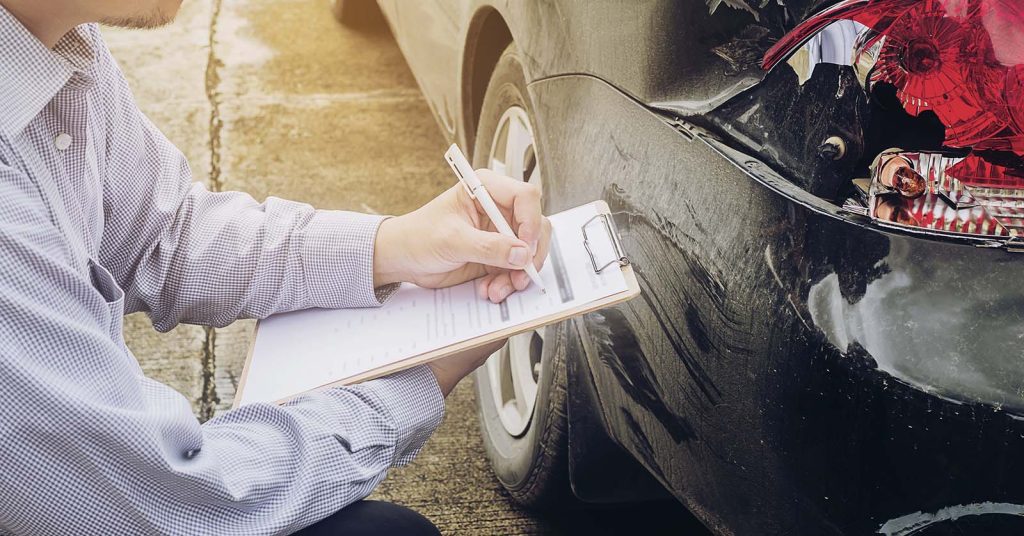
A car insurance claim is easier to manage when you treat it as a documentation process rather than a single phone call.
Safety dominates the first few minutes, while preserving facts becomes the priority soon after. From there, the claim turns into a sequence of coverage decisions, estimates, inspections, repairs, payments, and sometimes negotiation. Knowing what information to collect — and which questions to ask before agreeing to a settlement — can prevent avoidable delays and make it easier to challenge a mistake.
Key Takeaways
- Make safety the first priority: move out of danger when possible and call 911 if anyone may be injured.
- Preserve evidence early: photograph vehicles, damage, the road, signs, debris, and other relevant conditions before the scene changes.
- Report the loss promptly: policies can require timely notice, and some state benefits have specific filing deadlines.
- Know whose coverage you are using: your own collision or comprehensive coverage can involve a deductible; a third-party liability claim works differently.
- An initial estimate may change: supplemental damage can be discovered during repair, and you can ask the insurer to explain its valuation or settlement in writing.
- Total-loss value and loan payoff are separate: owing more than the vehicle is worth can leave a loan balance unless qualifying gap protection applies.
- State insurance departments can help with claim-handling disputes: especially when a claim appears unfairly delayed, denied, or underpaid.
What to Do Immediately After a Crash or Vehicle Loss
For a collision, safety comes before insurance paperwork.
- Check for injuries. Call 911 when anyone may be hurt or emergency assistance is needed.
- Move out of active traffic when it is safe and lawful to do so. Preserving exact vehicle positions is not worth creating a second hazard.
- Contact police when required or appropriate. State reporting rules differ. Theft, hit-and-run incidents, serious crashes, and accidents involving injuries commonly warrant prompt police involvement.
- Exchange information. Collect the other driver’s name, contact information, insurer, policy information if available, driver’s license number, license plate, and vehicle details.
- Get witness information. A neutral witness can matter when drivers disagree about what happened.
- Photograph the scene. Take wide shots and close-ups before vehicles are moved if you can do so safely.
Useful scene records include the other vehicle’s make and model, license plate, witness contacts, responding officer information, time and location, road conditions, and photographs or a diagram.
Document More Than the Damage
Photographs worth taking can include:
- all sides of each involved vehicle;
- close-ups of damaged areas;
- vehicle positions;
- lane markings, traffic lights and signs;
- skid marks or debris;
- weather and visibility conditions;
- the other vehicle’s license plate; and
- damage to property other than the vehicles.
Stick to observable facts. You do not need to diagnose fault at the roadside, speculate about speed, or argue with another driver for the claim to begin.
Step-by-Step: How to File the Claim
1. Notify the Insurer Promptly
Use the claims phone number, website, or app listed by your insurer. Prompt notice is important because policies impose reporting duties and state claim rules can add separate requirements.
Have your policy number available if possible, but do not delay reporting solely because you cannot immediately find every document.
2. Provide the Basic Loss Information
Expect the insurer to ask for:
- date, time, and location;
- what happened;
- vehicles and drivers involved;
- scene photos or video;
- witness details;
- police report or report number, if available;
- where the vehicle is located;
- whether it is drivable; and
- information about injuries when relevant.
Keep the claim number somewhere easy to access. You will use it for future calls, documents, repairs, and payments.
3. Confirm Which Coverage Is Handling the Loss
Different events can trigger different parts of the policy.
- Collision can cover eligible crash damage to your vehicle.
- Comprehensive can cover eligible losses such as theft, hail, vandalism, fire, flood, falling objects, or an animal strike.
- Liability can respond to covered claims from other people when you are legally responsible.
- PIP or MedPay can address eligible medical costs depending on the policy and state rules.
- UM/UIM can become relevant when an at-fault driver has no insurance or insufficient coverage, subject to state and policy rules.
Drivers unsure what they bought can review the main types of car insurance before discussing coverage with the adjuster.
4. Work With the Adjuster
A claims adjuster will generally investigate the loss and determine what the policy will pay. Photos, virtual or in-person inspections, repair estimates, police records, statements, and other documentation can all become part of that review.
Respond to reasonable document requests and keep copies of everything you submit. Maintain a dated record of conversations with the agent or adjuster as well.
5. Review the Estimate Before Repairs Begin
An initial estimate is not always the final repair cost. Once a shop disassembles the vehicle, it can discover hidden damage that was not visible in photographs or the first inspection.
Hidden damage discovered during repair can be handled through a supplemental estimate under the claim process. Ask how supplements are handled before authorizing work if the process is unclear.
6. Track Payments, Deductibles, and Transportation
Using your own collision or comprehensive coverage can reduce the insurer’s payment by the applicable deductible. Review how car insurance deductibles work if you are unsure how that amount affects the settlement.
Rental reimbursement is separate coverage on many policies. Anyone with rental reimbursement should confirm the daily limit, overall maximum, start point, and end point before booking a rental.
Should You File With Your Insurer or the Other Driver’s?
When another driver appears responsible, there can be two different paths for vehicle damage.
Using the Other Driver’s Liability Insurance
You can make a third-party property damage claim against the other driver’s insurer when appropriate. Because you are not using your own collision coverage, your own collision deductible generally is not part of that claim.
That route avoids using your own collision coverage, but the other insurer must investigate liability and damage before paying. Disputed fault or an uncooperative insured can slow the claim.
Using Your Own Collision Coverage
Collision coverage may let you use your own policy instead of waiting for another insurer to accept responsibility. The deductible can apply.
After paying the covered loss, your insurer may pursue the responsible party or carrier through subrogation. Deductible recovery depends on the recovery, state law, and circumstances — do not assume reimbursement is guaranteed.
Deadlines Can Be Much Shorter Than You Expect
There is no single nationwide deadline for every auto claim. Policy notice and proof requirements can operate alongside state-law deadlines for particular benefits.
New York provides a useful example of why waiting can be risky. Its Department of Financial Services currently states that a person seeking No-Fault benefits generally must provide written notice as soon as reasonably practicable and no later than 30 calendar days after the accident, unless there is clear and reasonable justification for late notice.
That does not create a 30-day rule for every claim in every state. It demonstrates why a national article should not tell drivers that they have a fixed number of days without checking the applicable policy and jurisdiction.
Any claim form, proof-of-loss request, medical form, or other deadline should go on your calendar immediately, with documents submitted in a way that preserves proof of delivery.
Repair Estimates, Repair Shops, and Hidden Damage
Claims involving repairable vehicles usually revolve around three questions: what damage resulted from the covered loss, what repair is reasonable under the policy and state rules, and how much that repair costs.
Insurers may recommend participating or network repair facilities. Whether an insurer can require, restrict, or steer repair-shop choice is governed in part by state law, so avoid assuming one national rule applies everywhere.
For example, New York’s Department of Financial Services states that an insurer may identify a repair shop willing to perform repairs at its estimate, but the consumer retains the right under New York law to choose the repair shop. Other states can use different procedures.
Choosing a repairer outside an insurer’s preferred network makes several questions worth asking:
- direct coordination between the shop and insurer on estimates and supplements;
- who is responsible for any difference between the insurer’s estimate and the shop’s charge;
- repair guarantees for network work compared with an outside shop; and
- how parts, labor rates, and supplemental damage will be handled.
Convenience alone should not drive the repair-shop decision. Understand who stands behind the work and who bears any disputed cost.
What Happens If Your Car Is a Total Loss?
Total loss changes the claim from a repair estimate to a vehicle-value settlement.
State-specific rules determine total-loss thresholds and valuation methods. Insurers generally compare repair economics with the vehicle’s pre-loss value and applicable state standards, so review the valuation report itself rather than only the final dollar amount.
Check whether the report accurately reflects:
- year, make, model, and trim;
- mileage;
- factory options and equipment;
- condition adjustments;
- comparable vehicles used in the valuation;
- taxes or fees required under applicable state rules; and
- your deductible if the settlement is under your own collision or comprehensive coverage.
Illinois, for example, publishes detailed consumer rules explaining how insurers can value a total loss, including use of valuation sources or dealer quotes in specified circumstances. Those rules are Illinois-specific, but they illustrate why you should check your own state’s total-loss standards when a valuation seems wrong.
Your Loan Balance Does Not Set the Vehicle’s Insurance Value
Financed vehicles can be worth less than the remaining loan balance. Standard auto insurance generally pays based on the covered value of the vehicle rather than simply paying off whatever you owe.
GAP is designed to cover some or all of a qualifying difference between the auto-loan balance and the insurer’s payment after a theft or total loss, subject to the product’s terms.
Any remaining loan balance above the settlement is the point to check whether you purchased gap protection.
If You Disagree With the Claim Decision or Settlement
An unexplained denial or valuation does not have to be the end of the process.
- Ask for the decision in writing. Request the policy language, valuation report, estimate, or factual reason supporting the insurer’s position.
- Correct factual errors. Send documents showing incorrect mileage, trim, options, prior condition, repair scope, or other relevant facts.
- Provide competing evidence. Depending on the dispute, that can include a repair estimate, valuation information, receipts, photographs, or comparable vehicles.
- Escalate within the insurer. Find out whether a supervisor, claim review, or internal appeal is available.
- Read the dispute provisions in your policy. Some policies contain appraisal or other mechanisms for valuation disputes.
- Contact your state insurance department when appropriate. State insurance departments can investigate complaints involving issues such as unfair delays or denials, failure to honor a policy, lack of timely communication, or violations of state insurance law.
Insurance regulators are not personal attorneys, but they can explain applicable rules and investigate conduct within their authority.
Claim Records Worth Keeping Until the Case Is Finished
Create one folder — digital or physical — for the entire claim.
- policy and declarations page;
- claim number;
- photos and video;
- police or incident report;
- witness information;
- emails and letters;
- notes from phone calls, including date and person spoken with;
- repair estimates and supplements;
- tow and storage invoices;
- rental receipts;
- medical documentation for injury claims;
- valuation reports for a total loss; and
- settlement or release documents.
Avoid signing a release you do not understand. A final release can affect your ability to seek additional payment later, and injury claims can involve legal issues beyond property damage. Significant or unclear consequences may justify appropriate professional advice in your state before you sign.
Frequently Asked Questions (FAQs)
How soon should I file a car insurance claim?
Report the loss promptly. Policies can require timely notice, and state-specific deadlines can apply to particular benefits. No single nationwide deadline applies, so check your policy and state rules.
Do I need a police report to file a car insurance claim?
Not for every loss, but police reporting may be legally required in some accidents and is especially important for theft, hit-and-run incidents, injuries, or serious crashes. Check the law where the event occurred.
Should I file with my insurer or the other driver’s insurer?
When another driver is responsible, a third-party claim can avoid using your collision deductible, but the other insurer still must investigate liability. Using your own collision coverage may move the vehicle-damage claim forward without waiting for the other carrier, but your deductible can apply.
Can I choose my own repair shop?
Repair-shop rights vary by state. Some states expressly protect the consumer’s ability to choose a repairer, while insurers may also offer network shops with streamlined claim handling or repair guarantees. Review your state’s insurance rules and ask how an outside shop will interact with the claim.
What if I disagree with a total-loss value?
Request the valuation report and check the vehicle details, mileage, options, condition adjustments, and comparable vehicles. Submit evidence correcting errors and review your policy and state rules for appraisal or other dispute options.
Will filing a claim raise my insurance rate?
It can, but there is no universal result. Fault, claim type, claim history, state law, insurer rating rules, accident-forgiveness features, and other factors can affect what happens at renewal.
Sources
- National Association of Insurance Commissioners — What You Should Know About Filing an Auto Claim
- National Association of Insurance Commissioners — Consumer’s Guide to Auto Insurance
- National Association of Insurance Commissioners — How Do I File a Complaint Against My Insurance Company?
- New York Department of Financial Services — Filing Claims Under Your Own Policy
- New York Department of Financial Services — No-Fault Insurance FAQs
- Illinois Department of Insurance — Total Loss Auto Claims With Your Insurance Company
- Consumer Financial Protection Bureau — Guaranteed Asset Protection (GAP)