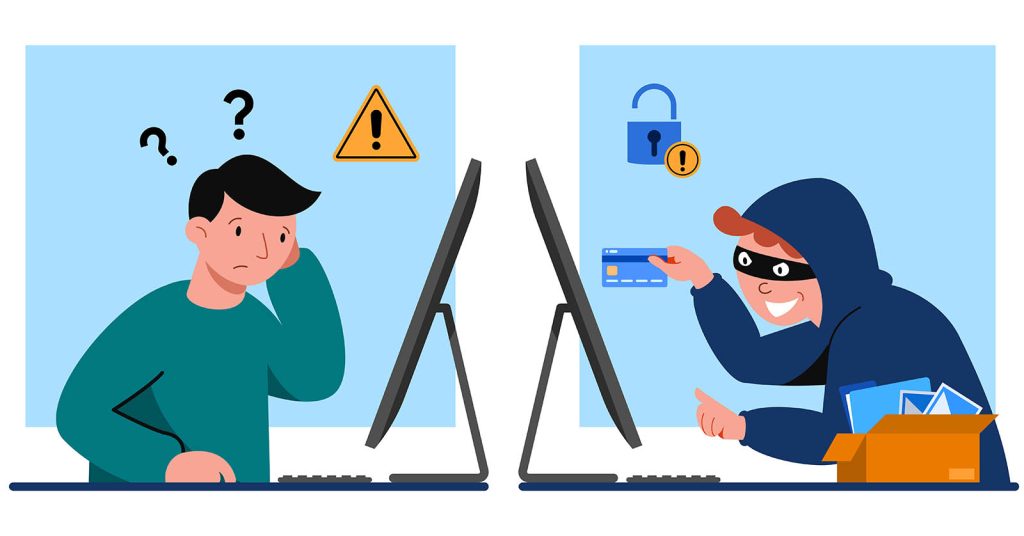
When you are under pressure to cover a bill, fix a car, or catch up on debt, a “too good to be true” loan offer can look like a lifeline. Scammers know this. They promise guaranteed approval, fast cash, and low monthly payments, then disappear with your money or your personal information. Even some legal but high-cost lenders rely on confusion and fine print to make a hard situation worse. The good news: most loan scams and abusive offers share predictable warning signs. Once you know what to look for, you can protect yourself, keep your identity safe, and focus on safer ways to borrow or get help.
Key Takeaways
- Legit lenders do not charge big fees up front — “processing,” “insurance,” or “tax” payments before you get money are a major red flag.
- Scammers rely on pressure and secrecy — they push you to act fast, avoid questions, and keep you away from written disclosures.
- Protect yourself by verifying and slowing down — check the lender’s registration, contact info, and reviews before sharing data or signing.
- If you get scammed, act quickly — cut off payments, report it, and monitor your credit so one bad moment does not turn into long-term damage.
Common Types of Loan Scams and Abusive Offers
“Loan scam” covers more than one trick. Some schemes are outright fraud, where there is never any real loan at all. Others involve real loans with very high costs or abusive terms that borrowers do not fully understand. Knowing the main patterns makes it easier to recognize trouble, even when the branding or sales pitch looks different.
One of the most common schemes is the advance-fee loan scam. A scammer advertises easy loans, sometimes for people with bad credit or recent bankruptcy. They say you are approved, then ask you to pay fees for insurance, taxes, or processing before the money can be released. Those fees are often requested via gift cards, wire transfers, money transfer apps, or cryptocurrency. Once you pay, the scammer vanishes or keeps inventing new reasons why more payments are needed. No legitimate consumer lender should require you to send money in this way before you receive a loan.
Another pattern is the fake lender or impersonator. Here, scammers pretend to be a well-known bank, credit union, online lender, or even a government agency. They may spoof caller ID, clone website designs, or use email addresses that look almost right but are slightly off. They often contact you first — by phone, text, email, or social media — saying you are pre-approved and only need to “verify your information” or pay a fee to lock in the offer. In reality, they are collecting data for identity theft or an advance-fee scam.
There are also high-cost, borderline legal loans that rely on confusion more than lies. Some storefront or online lenders advertise “personal loans,” “installment loans,” or “no credit check offers” that technically exist but carry extremely high annual percentage rates (APRs), mandatory add-on products, or aggressive penalties. These offers may not be classic scams, but they function similarly in practice: borrowers end up paying far more than they expected and may get trapped in repeat borrowing or refinancing.
Social media and messaging apps have opened the door to peer-to-peer style loan scams. Fraudsters pose as individuals offering “investment loans,” “crypto-backed loans,” or community help. They ask you to send money or crypto as a “security deposit” or “release fee,” then block you. Because these interactions often happen in private messages, victims may feel embarrassed or unsure where to report them, which allows scammers to keep recycling the same scripts with new targets.
Some schemes focus on student loan or debt relief promises. You might see ads claiming that a company is part of a federal program, can erase your loans, or has special access to government forgiveness if you pay fees now. In reality, legitimate federal programs and servicers do not charge large up-front fees just to enroll in income-driven repayment, consolidation, or forgiveness options, and you can usually apply directly yourself.
Another common scheme involves check-deposit and overpayment scams. A “lender” sends you a check or claims to have deposited funds in your account, then asks you to send part of the money back by wire or gift card. The original check later bounces, leaving you responsible to your bank for the full amount you sent. Real lenders do not need you to “test” a deposit or send a portion back to them using hard-to-trace methods.
All of these schemes thrive on stress, urgency, and a feeling that you may not qualify for safer credit. When you understand that these tactics are common, it becomes easier to step back and ask, “If this offer is real, why does it look and feel like a scam playbook?”
Major Red Flags: How to Spot a Loan Scam in Seconds
Although scammers adapt their scripts over time, the warning signs of a risky or fraudulent loan are surprisingly consistent. If you see several of these red flags together, it is safer to walk away and re-check your options than to give in to pressure.
A big warning sign is any request for payment before you receive the loan. This can be framed as an application fee, insurance, taxes, or a deposit to “prove you can make payments.” Scammers often insist on payment methods that are hard to reverse or trace, like gift cards, wires, money transfer services, or cryptocurrency. Legitimate lenders may charge origination fees, but they normally deduct those from the loan proceeds or include them in the APR, not as separate payments to be sent up front.
Another red flag is a promise of guaranteed approval regardless of your credit, income, or debt. Real lenders evaluate your ability to repay; they do not approve everyone at the same rate or for the same amount. Language like “everyone approved,” “no income required,” or “we don’t care about your credit history” is often a sign that the real goal is your fees or personal data, not a sustainable loan.
Pay attention to pressure tactics and secrecy. Scammers and abusive lenders often push you to act immediately, warning that the offer expires in hours or that you will never get another chance. They may discourage you from talking to friends, family, or a trusted advisor, or they may resist giving you written documents to review. A legitimate lender should not be afraid of your questions and should give you time to think before you sign.
The lender’s contact information is another key clue. Be skeptical of companies that have no physical address, only a free email account, or a bare-bones website with broken links and vague details. If the phone number or address cannot be verified through an independent search, or if the business name is almost—but not exactly—the same as a well-known bank, there is a real risk you are dealing with an impersonator.
Some scammers and questionable firms ask for unusual access to your accounts. That can include remote access to your online banking, requests for your login credentials, or demands for copies of both sides of your debit card. Legitimate lenders do not need your online banking password to verify income or account status. They may ask for pay stubs, tax forms, or permission to see your credit reports, but they should never ask for full control of your devices or accounts.
You should also watch for offers that show up out of nowhere. Unsolicited calls, texts, direct messages, or emails that claim you have been “pre-approved” for a loan you never applied for are suspicious, especially if they ask you to click a link or share personal details immediately. Even if the name looks familiar, it is safer to contact the bank or lender using a phone number or website you find yourself rather than anything in the message.
Another major warning sign is a mismatch between the advertising and the actual terms. If the ad promotes low rates, but the documents show extremely high APRs, large fees, or aggressive collateral requirements, that is a sign to step back. Clarity and consistency are hallmarks of reputable lending; confusion and surprise charges often indicate the opposite.
How to Vet a Lender and Protect Yourself Before You Apply
The most powerful tool you have against loan scams is not a special app or insider trick — it is the decision to slow down and verify before you share information or sign. A few simple checks can dramatically reduce your risk, especially when you are dealing with an unfamiliar lender or a very attractive offer.
Start by researching the lender’s name along with words like “reviews,” “complaints,” and “scam.” While online reviews are imperfect, patterns of unresolved issues, surprise fees, or aggressive collection behavior are worth noting. Check whether the lender lists a physical address and customer service number, and verify them independently. If you cannot find the business in basic searches or the details do not match, that is a strong reason to avoid the offer.
Next, check whether the lender is properly registered or licensed where you live. Many states require lenders and loan brokers to be licensed, and some maintain public databases where you can look up company names. For certain types of lenders, you may also be able to search a national system that tracks registrations. While registration alone does not guarantee fair treatment, a lack of registration where it is required is a major warning sign.
When you visit the lender’s website, look at the web address and security indicators. A secure site will typically use “https” and show a padlock symbol in most browsers. Be wary of sites with obvious spelling mistakes in the domain name, poor grammar throughout, or missing legal pages like privacy policies and disclosures. If the site encourages you to apply by sending personal data through unsecured email or messaging apps, do not proceed.
Before you submit a full application, understand what kind of credit check the lender will use. Many legitimate lenders offer prequalification with a soft credit pull, which lets you see estimated rates without affecting your credit scores. If an unfamiliar lender insists on a hard pull before giving any meaningful information about rates or terms, that is a sign to be cautious, especially if other lenders in the same space are more transparent.
Finally, read the disclosures and draft loan agreement carefully. Confirm the APR, the total of payments over the life of the loan, the schedule of fees, and any prepayment penalties or mandatory add-on products. If the lender cannot or will not provide this information in writing before you commit, or if they discourage you from taking the time to review it, you are safer walking away than accepting an offer you do not fully understand.
What to Do If You Suspect a Loan Is a Scam or You’ve Been Caught
Even careful people can get caught off guard by a convincing pitch, especially during stressful moments. If you suspect that an offer you are considering is a scam, or if you have already sent money or information, acting quickly can limit the damage. The goal is to cut off the scammer’s access, protect your accounts and identity, and report what happened so others may be warned.
If you have not yet sent money or sensitive data, the safest step is simple: stop engaging. Do not reply to texts or calls, do not click additional links, and do not send copies of documents. Instead, verify the company through independent channels — such as official websites or known phone numbers — or choose a different, well-established lender you can contact on your own.
If you have already paid an up-front fee, contact the company that handled the payment right away. For example, if you sent money via a credit or debit card, call the card issuer and explain that you believe you were scammed; they may be able to help you dispute the transaction. If you used a wire transfer, money transfer service, or gift card, it is often harder to recover funds, but it is still important to report it as fraud as quickly as possible. In some cases, fast action may stop a transfer before it is completed.
If you shared bank account or card details, consider closing or changing the affected accounts and requesting new card numbers. Monitor recent transactions closely and report anything you do not recognize. If the scammer has your Social Security number or other key identity details, consider placing fraud alerts or security freezes with the major credit bureaus and watching your credit reports for new accounts you did not open.
Reporting the scam can help protect others. You can file complaints with federal consumer agencies, your state attorney general or financial regulator, and, in some cases, local law enforcement. These reports help authorities spot patterns, pursue enforcement actions, and issue public warnings about specific schemes. Keep copies of all messages, receipts, and screenshots related to the scam; they may be useful if there is an investigation or if your bank or card issuer asks for documentation.
If you are left with unaffordable debts after dealing with a high-cost lender — even one that is technically legal — it may help to talk to a nonprofit credit counselor or a legal aid organization. They can review your overall situation, help you prioritize which bills to pay first, and suggest options like repayment plans, negotiation, or, in serious cases, legal remedies. You do not have to untangle complex debt issues alone.
Most importantly, try not to let shame keep you from seeking help. Scammers design their tactics to work on busy, intelligent people who are under pressure. Asking for assistance is a sign that you are taking control back, not a sign that you failed.
Frequently Asked Questions (FAQs)
Do real lenders ever ask for money before giving me a loan?
Reputable consumer lenders generally do not ask you to send separate fees before disbursing a loan, especially not via gift cards, wire transfers, or money transfer apps. Some lenders charge origination fees, but these are normally deducted from the loan amount or included in the APR. If someone says you must pay “taxes,” “insurance,” or “processing fees” up front by unusual methods, it is likely a scam.
How can I tell if a loan offer email or text is really from my bank?
Do not rely on caller ID or links in the message, because scammers can spoof them. Instead, contact your bank using a phone number from your statement or the bank’s official website, or log in through your usual app or saved bookmark. Ask whether the message is genuine. If the bank cannot see any corresponding offer or communication, treat the message as suspicious and do not click links or share information.
Is a very high APR always a scam?
A very high APR is not automatically illegal or fraudulent; in some states, certain high-cost loans are allowed by law. However, triple-digit APRs and heavy fees are a strong sign that a loan is risky and may be difficult to repay. Even if the loan is technically legal, it may not be wise for your situation. If you see very high rates, it is worth looking at alternatives such as payment plans, lower-rate personal loans, or nonprofit assistance.
What if I signed documents without reading them — can I cancel?
Your ability to cancel depends on the type of loan, the contract, and state and federal law. Some loans have limited “right to cancel” periods; others do not. If you signed with a legitimate lender and now regret it, contact them immediately to ask about your options and review your agreement closely. If you suspect fraud or misrepresentation, consider reaching out to legal aid or a consumer-law attorney to discuss your rights.
Where can I get help if I think I’ve been targeted by a loan scam?
If you believe you have been targeted or victimized, start by contacting your bank or card issuer to protect your accounts. Then consider filing reports with appropriate consumer protection agencies and your state attorney general. Nonprofit credit-counseling agencies and legal aid organizations can help you understand your options if the situation left you with debts you cannot manage or with damaged credit.
Sources
- Consumer Financial Protection Bureau — Warning signs of loan scams and protections for borrowers
- Federal Trade Commission — Advice on personal loans, advance-fee loan scams, and how to avoid fraud
- USA.gov — Overview of common loan and debt relief scams and where to report them
- USA.gov — What to do if your identity or financial information has been exposed
- National Foundation for Credit Counseling — Nonprofit credit counseling and help for people struggling with debt