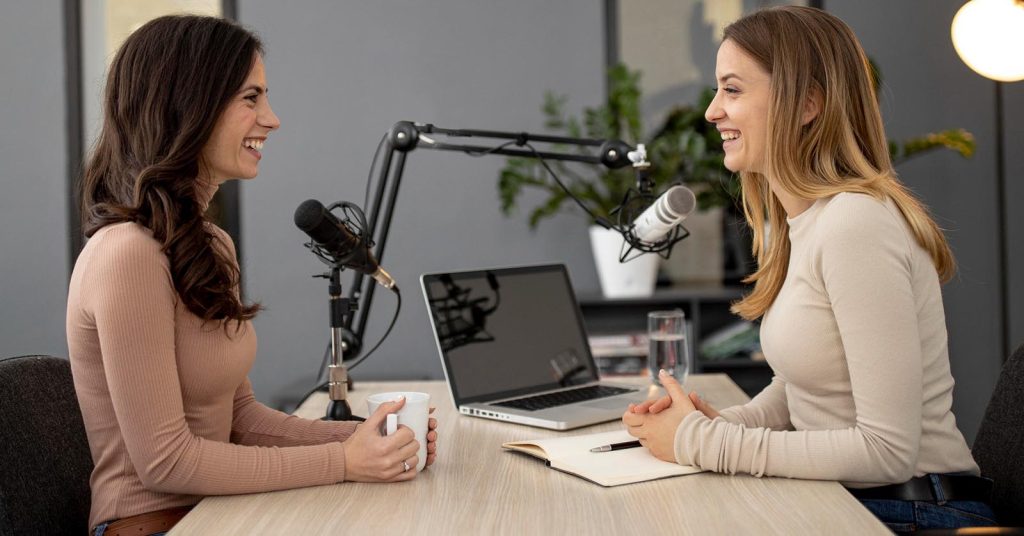
Podcasting can create a strong relationship with an audience because listeners choose to spend sustained time with a host, not merely scroll past a post. That attention can be commercially valuable, but it does not automatically turn downloads into dollars. Impressive listening numbers can coexist with weak ad fill, while a smaller industry show may generate meaningful sponsor, affiliate, or client revenue from a tightly defined audience.
The first business question is what makes these listeners valuable. Advertisers may want reach. Sponsors may want credibility and niche access. Loyal fans may pay for bonus episodes. Listeners may buy a recommended product, join an event, or hire the host. Monetization should follow the audience relationship rather than a generic “X downloads = profitable podcast” formula.
Key Takeaways
- There is no universal monetization threshold: direct sponsors, affiliates, products, or services can work before a show qualifies for large-platform ad programs.
- Downloads are not revenue: ad inventory still needs to be sold or filled, and sponsor economics depend on the audience a brand actually values.
- Spotify’s current Partner Program has measurable entry requirements: eligible hosted shows need at least 3 episodes, 2,000 Spotify consumption hours, and 1,000 Spotify audience members in the previous 30 days.
- Spotify currently shares 50% of recognized ad revenue on Spotify-monetized ads: direct baked-in host-read deals remain separate.
- Paid subscriptions have platform economics: Spotify’s current subscription fee schedule lists 5.5% payment processing, while Apple pays creators 70% of subscription price in a subscriber’s first year and 85% after one year, minus applicable taxes.
- Sponsorship price is more than CPM: host credibility, niche, audience geography, placement, usage rights, exclusivity, and production requirements can materially change a deal.
- Affiliate offers need buying intent: a small product-review or professional audience can outperform a much larger general audience.
- Recurring revenue introduces churn: paid feeds and memberships need continuing value, not just a launch spike.
- FTC endorsement rules apply to podcasts: material relationships can require clear disclosure when listeners may not otherwise understand the connection.
The Main Ways Podcasts Make Money
Revenue generally comes from one of three groups: advertisers paying to reach the audience, listeners paying for access or products, and businesses paying because the podcast creates customers, leads, or intellectual property.
| Revenue stream | Who pays? | What drives value? | Main risk |
|---|---|---|---|
| Dynamic ads | Advertisers through a platform or network | Eligible ad impressions and audience characteristics | Low fill, variable demand, revenue-share terms |
| Direct sponsorships | Brands or agencies | Host trust, niche access, reach, campaign rights | Deal concentration, payment collection, broad rights |
| Paid subscriptions | Listeners | Bonus episodes, ad-free listening, early access, premium content | Churn, platform fees, extra production |
| Memberships | Fans | Community, access, perks, ongoing support | Recurring workload and benefit creep |
| Affiliate marketing | Merchants or networks | Tracked qualifying purchases or leads | Attribution, reversals, commission changes |
| Products / services | Customers or clients | Expertise, brand, audience need | Fulfillment, support, capacity |
| Events / licensing | Attendees, media buyers, partners | Access, community, intellectual property | Operational complexity and rights management |
The same principle applies across creator income: a podcast is stronger when monetization fits the audience instead of forcing every available revenue stream into the show.
Podcast Ads and Direct Sponsorships Work Differently
“Podcast advertising” can describe several very different arrangements.
Dynamic ads can fill available slots based on audience or campaign criteria. Baked-in host reads become part of the episode itself. Sponsors negotiating directly may buy a custom segment, pre-roll, mid-roll, product placement, newsletter inclusion, social promotion, or a package across several channels.
Dynamic ads, baked-in reads, and direct sponsorship packages should not be priced or forecast as though they are interchangeable.
Dynamic Ads Depend on Filled Inventory
An episode with 100,000 eligible ad opportunities does not automatically produce 100,000 paid impressions.
Advertiser demand still has to match the show and its listeners. Geography, brand safety, category, campaign dates, targeting, listener device, ad availability, and platform rules can all affect whether an impression is monetized.
Fill rate is one useful operating metric:
Use the platform’s own denominator consistently when its fill-rate definition differs.
Direct Host-Read Sponsorships Can Carry More Value
Host reads may be more valuable to advertisers because the message uses the host’s voice and sits inside a trusted editorial environment.
Custom sponsorships can also pay for elements that ordinary dynamic ads do not include. The same creator sponsorship terms that matter on social platforms—usage rights, exclusivity, revisions, and payment timing—can materially change a podcast deal.
- custom script development;
- personal endorsement language;
- category exclusivity;
- social promotion;
- newsletter placement;
- episode-title or show-note inclusion;
- video placement;
- clips or cutdowns;
- paid usage rights; or
- multi-episode campaign commitments.
By contrast, Sponsor B offers a higher total fee but also wants category exclusivity, video clips for paid advertising, two social posts, and rights to reuse the host’s endorsement for six months.
That second package may justify a materially higher price even when expected podcast impressions are identical.
Use CPM Carefully—and Measure Effective Revenue
CPM, or cost per thousand impressions, is a common podcast-advertising pricing reference.
$1,200 ÷ 60,000 × 1,000 = $20 CPM.
Quoted CPM figures do not mean the whole podcast earns that amount for every 1,000 episode downloads. Campaign terms may cover only one ad slot, only certain listeners, or only part of the episode’s available inventory.
Your own reporting should also track:
- revenue per episode;
- revenue per 1,000 total listens or downloads;
- revenue per filled ad impression;
- unsold inventory;
- sales commissions or network share;
- production cost for sponsor creative; and
- payment lag.
Do Not Copy a “Standard Podcast CPM” Into Your Forecast
No single CPM applies to every podcast.
Rates can vary with:
- audience country;
- niche;
- audience purchasing power;
- ad format;
- host involvement;
- campaign length;
- seasonality;
- brand demand;
- inventory scarcity;
- measurement method; and
- rights included in the deal.
Use your own sold campaigns and platform statements as the operating baseline once you have enough history.
Spotify Partner Program: Current Eligibility and Revenue
Spotify’s current Partner Program combines several monetization opportunities for eligible shows hosted with Spotify for Creators.
Current Spotify Partner Program eligibility requires all of the following:
- hosting with Spotify for Creators;
- a legal address in an eligible market;
- at least 3 published episodes;
- at least 2,000 consumption hours on Spotify in the previous 30 days; and
- at least 1,000 audience members on Spotify in the previous 30 days.
Eligibility thresholds can change, and Spotify also applies monetization-policy review.
Spotify Ad Revenue Share
Under current Partner Program terms, creators earn 50% of the revenue recognized for each ad monetized by Spotify, subject to applicable transaction fees and program terms.
Recognized revenue at a 50% share is not the same as receiving 50% of every advertiser dollar associated with the show in every circumstance. Use Spotify’s own earnings reports for the amount attributable to your program.
Creator sponsorships sit outside Spotify-served ad revenue. Its monetization materials say creators keep the revenue from their own baked-in host-read deals.
Premium Video Revenue Adds Another Layer
Eligible video podcasts can also earn Premium video revenue when Spotify Premium subscribers in supported markets watch video episodes without dynamic ads.
Qualifying video consumption, rather than ordinary ad impressions, drives that Premium video revenue.
Video podcasts should keep ad revenue, Premium video revenue, sponsorships, and off-platform revenue separate so one dashboard metric does not hide the economics of another.
Paid Podcast Subscriptions: Spotify vs. Apple
Paid subscriptions convert a portion of the audience from free listeners into recurring customers.
Common subscriber benefits include:
- bonus episodes;
- ad-free listening;
- early access;
- subscriber-only series;
- archive access;
- private feeds;
- video or livestream access; and
- community or other member benefits.
Platform economics differ materially.
Spotify Subscriptions
Spotify-hosted direct subscriptions currently require:
- hosting the show with Spotify for Creators;
- availability in an eligible market;
- at least 2 published episodes; and
- at least 100 unique Spotify listeners in the previous 60 days.
The current fee schedule lists a 5.5% payment-processing fee on Spotify subscription payments, plus foreign-exchange fees when applicable and taxes where required.
Eligible paid podcasts can also connect supported external membership platforms such as Patreon, Substack, Supporting Cast, and other integrated services to make subscriber-only content available on Spotify.
Apple Podcasts Subscriptions
Apple follows a different model.
In the United States, the Apple Podcasters Program currently has an annual fee of $19.99.
Current Apple subscription terms provide creators:
- 70% of the subscription price at each billing cycle during a subscriber’s first year, minus applicable taxes; and
- 85% after that subscriber accumulates one year of paid service, minus applicable taxes.
Advertising and other non-subscription podcast revenue remains outside that subscription share.
| Platform | Current creator economics | Important qualification |
|---|---|---|
| Spotify direct subscriptions | Current fee schedule lists 5.5% payment processing, plus applicable FX and taxes | Hosted with Spotify for Creators; minimum episode/listener requirements |
| Apple Podcasts Subscriptions | 70% creator proceeds during subscriber’s first year; 85% after one year, minus applicable taxes | Apple Podcasters Program; U.S. annual program fee currently $19.99 |
| External membership platform | Depends on platform plan, processing, and integrations | Can provide more control or broader benefits but adds another vendor relationship |
Subscription Revenue Needs Retention
Strong launch numbers can still turn into weak recurring economics if the premium feed does not remain valuable.
Track new subscribers and cancellations separately. Growth can temporarily hide high churn when acquisition is strong.
Memberships Can Extend Beyond a Paid Feed
A creator membership is broader than a podcast subscription when the customer pays for a bundle of benefits rather than only premium episodes.
Possible benefits include:
- private podcast feeds;
- community access;
- live Q&A sessions;
- member chat;
- video streams;
- research or notes;
- discounts;
- events;
- early access; and
- bonus content.
Deeper customer relationships are the advantage; benefit creep is the risk.
Over time, the creator adds weekly calls, a private community, individual questions, downloadable resources, and member-only livestreams without changing the price.
Revenue may grow while the workload grows faster.
Recurring revenue is useful only when the benefit package remains economically sustainable.
Affiliate Marketing Can Work With a Small, High-Intent Audience
Affiliate revenue works when a recommendation connects naturally to something the listener is already considering.
Examples include:
- software mentioned in a business show;
- books discussed in an education podcast;
- equipment used in a production show;
- travel products in a travel podcast;
- financial products where the publisher can meet the required legal and editorial standards; and
- services that solve a recurring listener problem.
Merchant terms determine what earns a commission.
Spoken promo codes can be easy for audio listeners to remember, but they do not automatically capture every sale. Tracking can work through show-note links, dedicated landing pages, account-based referrals, or other methods, each with its own attribution rules.
The full affiliate revenue process includes pending commissions, reversals, attribution windows, program restrictions, and payout timing.
Measure Approved Revenue, Not Promo-Code Mentions
Track:
- clicks or visits where measurable;
- promo-code uses;
- qualified conversions;
- tracked commissions;
- approved commissions;
- reversals;
- payout lag; and
- revenue per episode or placement.
Early results from a sponsor or affiliate program can be much less attractive after returns and reversals settle.
Products and Services Can Make the Podcast a Customer-Acquisition Channel
Podcasting does not require the show itself to be the product.
Shows can attract customers for:
- digital products;
- online courses;
- paid newsletters;
- workshops;
- software;
- consulting;
- freelance or professional services;
- books;
- physical products;
- events; and
- other businesses connected to the show’s expertise or audience.
If a few listeners each quarter become qualified customers for a high-value workshop or consulting engagement, the show can be financially useful even if automated ad revenue remains small.
Revenue per download can therefore be misleading when used alone. Podcasts can create business value that never appears inside the hosting platform’s monetization dashboard.
Repeatable downloadable offers still depend on the economics of selling digital products, including pricing, platform and payment fees, refunds, support, licensing, and applicable taxes.
Make the Call to Action Match the Episode
Someone who just finished a detailed episode about one problem should not have to visit a generic homepage and guess what to do next.
One more direct path might be:
- software episode → relevant affiliate resource;
- educational series → matching workshop;
- industry analysis → newsletter signup;
- case study → consultation page;
- template walkthrough → product page; or
- community episode → membership page.
Giving listeners one relevant next step is usually easier to measure than stacking several unrelated promotions into the closing minute.
Measure Podcast Economics Beyond Downloads
Audience metrics tell you whether people listen. Business metrics tell you whether the show is worth producing.
| Metric | What it helps answer |
|---|---|
| Revenue per episode | How much economic value does a typical release generate? |
| Ad fill rate | How much eligible inventory actually monetizes? |
| Effective ad revenue per 1,000 listens | What does the overall ad system produce relative to audience size? |
| Sponsor revenue | How much comes from directly negotiated brand relationships? |
| Paid subscribers | How much of the audience pays for premium access? |
| Subscription churn | How quickly recurring revenue is leaking? |
| Approved affiliate revenue | What survives merchant validation and reversals? |
| Attributed product / service revenue | How much customer value the show creates outside podcast platforms? |
| Production cost | What hosting, editing, equipment, studio, travel, and contractors cost? |
| Host / producer hours | How labor-intensive the show is? |
| Revenue concentration | How dependent the business is on one sponsor, platform, or offer? |
Dynamic ads: $700
Direct sponsors: $3,000
Paid subscriptions: $900
Approved affiliate revenue: $450
Product sales attributed to the show: $1,200
Total attributed revenue: $6,250
Editing, hosting, research, software, travel, and contractor costs total $2,100.
What remains after those costs is more useful than the $6,250 top-line screenshot for judging the business.
Track Concentration Before It Becomes a Problem
Heavy dependence on one sponsor can leave an otherwise healthy show financially fragile.
Diversification is useful only when it reduces a real concentration risk. The important question is what would happen if the largest sponsor, platform, affiliate program, or product disappeared.
Podcast Sponsorships and Endorsements Need Clear Treatment
Endorsements in podcasts are subject to the same federal endorsement principles that apply across media.
Material marketer relationships should be disclosed clearly when listeners would not otherwise understand the connection and it could affect how they evaluate the endorsement.
Obvious commercials create an important nuance. Current FTC guidance includes a podcast example in which a host reads what is clearly a commercial near the beginning of the show. In that situation, listeners would likely already understand that the host is being paid, so a separate disclosure of payment may not be necessary.
Other endorsement requirements still apply.
Personal opinions or experience presented by the host need to reflect what the host actually believes or experienced. Product claims also cannot become misleading merely because they are delivered conversationally.
Make the Commercial Nature Understandable in Audio
Plain spoken disclosure near the endorsement is generally easier for an audio listener to understand than relying only on show notes.
Exact wording depends on the relationship and context. No magic phrase is required; the goal is to make the connection understandable to the audience.
Affiliate relationships can require separate disclosure when the host recommends a product and may earn a commission from listener purchases.
Keep Podcast Revenue, Cash Flow, and Taxes Separate
Five revenue dashboards can still leave a podcast with little cash in the bank.
Dynamic ad revenue may wait for a platform payout. Sponsors can owe invoices on Net 30 or Net 60 terms. Subscription revenue is reduced by platform or payment fees. Affiliate commissions can remain pending or be reversed. Annual memberships can collect cash before months of future content have been produced.
Record:
- revenue source;
- gross amount;
- fees or revenue share;
- refunds or reversals;
- invoice date;
- payment due date;
- cash received date;
- business expenses; and
- supporting contracts and statements.
A basic bookkeeping system becomes especially valuable once the show has several sponsors, subscriptions, and affiliate programs.
Podcast Income Is Generally Taxable
Taxable gig and digital-platform income generally must be reported even when it is part-time, temporary, paid in another form, or not reported on an information return.
Business income from a podcast can include:
- advertising revenue;
- sponsor payments;
- subscription and membership revenue;
- affiliate commissions;
- product and service sales;
- event revenue;
- licensing payments; and
- other compensation connected to the business.
Self-employed podcasters may also need estimated tax payments and self-employment tax depending on their facts.
Do not wait for a Form 1099 to decide whether revenue belongs in the books.
Frequently Asked Questions (FAQs)
How many downloads do you need to make money from a podcast?
Podcasts do not have a universal download threshold for monetization. Relatively small but valuable audiences can still support sponsorships, affiliate offers, products, or services. Platform ad programs can impose their own eligibility rules, which are different from a general industry download requirement.
What are the current Spotify Partner Program requirements?
Current U.S. Partner Program eligibility requires eligible shows hosted with Spotify for Creators to have at least 3 published episodes, 2,000 Spotify consumption hours in the previous 30 days, and 1,000 Spotify audience members in the previous 30 days, plus an eligible legal address and policy compliance.
How much of Spotify ad revenue does a podcast creator receive?
Spotify’s Partner Program terms currently provide creators 50% of the revenue recognized for each ad monetized by Spotify, subject to program terms, applicable fees, and adjustments. Creator-negotiated sponsorships are separate from Spotify-monetized ads.
How do Spotify podcast subscriptions work?
Direct subscription eligibility currently requires shows to be hosted with Spotify for Creators, have at least 2 published episodes, and have at least 100 unique Spotify listeners in the previous 60 days in an eligible market. Its current fee schedule lists a 5.5% payment-processing fee plus applicable foreign-exchange fees and taxes.
How much does Apple take from podcast subscriptions?
Creators currently receive 70% of the Apple subscription price during each subscriber’s first year and 85% after that subscriber accumulates one year of paid service, minus applicable taxes. Apple currently charges a $19.99 annual fee for the U.S. Podcasters Program.
Are podcast sponsorships priced by CPM?
They can be, but CPM is only one pricing model. Host-read campaigns can also be negotiated as flat fees or packages, and pricing can reflect audience value, placement, exclusivity, usage rights, creative work, and other deliverables.
Can a small podcast make money with affiliate marketing?
Yes. Smaller shows can generate useful affiliate revenue when listeners have strong commercial intent and the recommendation fits the content. Earnings depend on tracked qualifying actions, attribution, commission terms, returns, and merchant rules.
Should a podcast offer a paid subscription?
Paid feeds make sense when listeners have a clear reason to pay for ongoing value, such as bonus episodes, ad-free listening, early access, premium series, or other benefits. Model conversion, churn, fees, and extra production workload before assuming recurring revenue will be profitable.
Do podcast hosts need to disclose sponsors?
FTC endorsement rules apply to podcasts. When listeners would not otherwise understand a material relationship that could affect the credibility of an endorsement, disclosure can be required. An obviously commercial host-read ad may already communicate that compensation exists, but personal endorsements and product claims must still be truthful and not misleading.
Is podcast income taxable?
Taxable podcast-business income generally must be reported. Advertising, sponsorships, subscriptions, affiliate commissions, products, services, and other creator revenue can all be taxable even when no information return arrives.
Sources
- Spotify for Creators — Spotify Partner Program
- Spotify for Creators — Monetizing Your Show
- Spotify for Creators — Monetization Features
- Spotify for Creators — Fee Schedule and Cashing Out
- Spotify for Creators — Connecting a Paid Podcast to Spotify
- Apple Podcasts for Creators — Subscription Launch Checklist
- Apple Podcasts for Creators — Feature Availability and Program Fees
- Federal Trade Commission — Advertisement Endorsements
- Federal Trade Commission — Endorsement Guides: What People Are Asking
- Internal Revenue Service — Gig Economy Tax Center