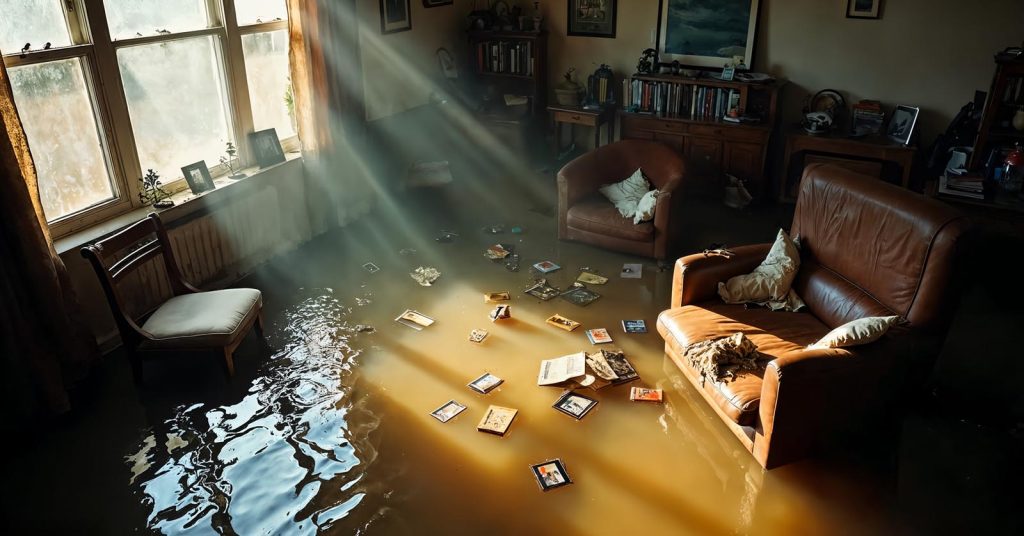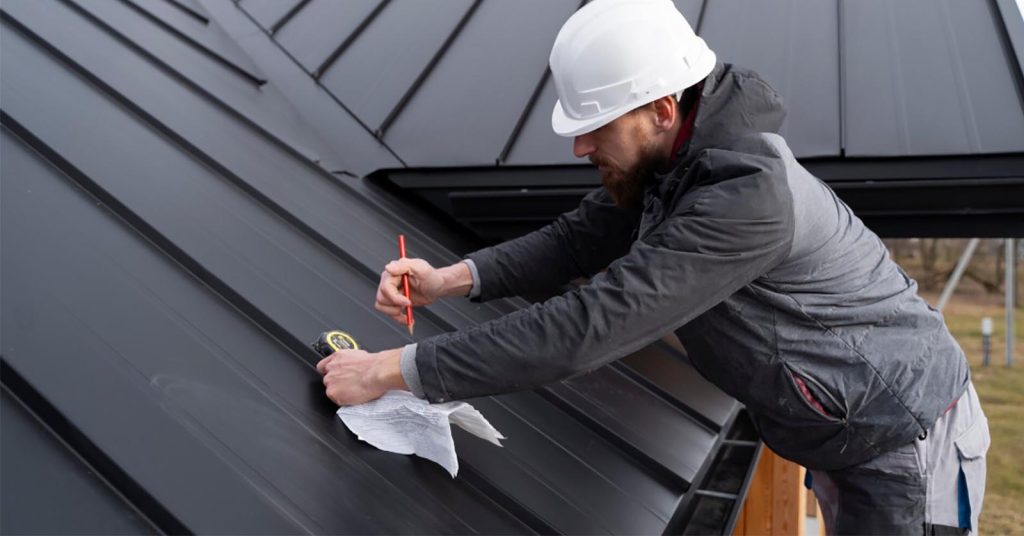
Roof leaks create two separate insurance questions: Why did the roof fail? and what did the water damage after it got inside?
Those questions can produce very different answers. A storm that tears shingles from a well-maintained roof may trigger dwelling coverage, while years of deterioration that finally let rain through may leave the homeowner responsible for both the roof repair and some or all of the resulting damage.
When Homeowners Insurance May Cover Roof Damage
Homeowners insurance is designed for covered losses, not routine roof replacement. In a typical homeowners policy, the roof is part of the dwelling, so damage can fall under dwelling coverage when the cause of loss is covered by the policy.
Windstorm and hail are commonly covered perils in homeowners policies, although individual contracts and high-risk markets can differ.
Examples of roof damage that may be covered include:
- Wind tears shingles or roofing material from the house
- Hail physically damages the roof
- A tree or large branch falls onto the roof
- Fire damages the roof structure
- Another sudden event covered by the policy creates direct physical damage
Cause matters more than the fact that the roof needs repair. Contractors saying “the roof must be replaced” does not by itself establish an insured loss.
Does Homeowners Insurance Cover a Roof Leak?
It can. A roof leak is more likely to be covered when it results from a sudden covered event.
Homeowners insurance can cover a sudden roof leak caused by a covered event, while gradual leakage and deterioration may be excluded. After storm or accidental roof damage, act quickly to prevent additional water from entering the home and document temporary repairs.
That is very different from a roof that has slowly deteriorated for years and has been allowing moisture through over time.
Coverage changes sharply with the source of the leak; homeowners insurance and water damage can involve different rules for burst pipes, appliance leaks, sewer backup and floodwater.
When Roof Damage Is Usually Not Covered
Homeowners insurance generally does not function as a maintenance plan.
Common reasons a roof claim may not be covered, or may be limited, include:
- Normal wear and tear
- Age-related deterioration
- Long-term or gradual leaks
- Rot or neglected maintenance
- Damage that falls under a policy exclusion
- Wind or hail when those perils are excluded from the particular policy
- Damage below the applicable deductible
- A roof-specific endorsement, schedule, or limitation that reduces coverage
Age or ordinary wear alone does not turn roof replacement into a covered insurance loss.
This distinction is one reason it is important to separate a coverage exclusion from ordinary deterioration. An exclusion removes a particular cause or type of loss from coverage; wear and maintenance issues can prevent a loss from qualifying even when the policy otherwise covers many sudden perils.
Will Insurance Replace an Old Roof?
Not merely because of age.
Even when a covered event damages an older roof, age can still affect how much the insurer pays.
Roof valuation can also change with age; some policies shift older roofs from replacement cost to actual cash value. Roofs in poor condition may also receive more limited coverage or no roof coverage under a particular policy.
That does not create a nationwide age cutoff. Insurers, policy forms, state rules, roof materials, and underwriting standards differ.
Instead of relying on a rule such as “insurance will not cover roofs over 20 years old,” check your actual declarations and endorsements for:
- Replacement cost versus actual cash value
- Roof payment schedules
- Roof age or condition endorsements
- Cosmetic-damage limitations
- Wind and hail exclusions
- Special roof deductibles
Replacement Cost vs. Actual Cash Value for a Roof
The valuation method can make a large difference in a roof claim.
Replacement cost value (RCV) generally pays the covered cost to repair or replace damaged property with materials of like kind and quality without deducting depreciation, subject to policy limits, deductibles, and other contract terms.
Actual cash value (ACV) reflects depreciation for factors such as age and condition, so an older roof can produce a substantially smaller settlement.
One regulator example uses a roof that costs $10,000 to replace with a $4,000 deductible to show how much of a covered loss can remain with the homeowner. In the illustrated replacement-cost scenario, the insurer would pay $6,000. By contrast, the ACV examples show that the insurer’s payment declines as the illustrated roof gets older and reaches zero for the oldest example because the depreciated value equals the deductible.
Those figures are an illustration from Texas DOI, not a universal depreciation schedule.
For the mechanics of depreciation and recoverable depreciation, see replacement cost vs. actual cash value.
Replacement Cost May Be Paid in Stages
Receiving replacement-cost treatment does not always mean the insurer sends the full replacement amount immediately.
Insurers may pay replacement-cost roof claims in stages, with an initial payment followed by additional covered amounts after repairs begin and required documentation is provided. Exact process depends on the policy and claim.
Recoverable depreciation commonly appears here: part of the replacement-cost amount may be held back until the policyholder completes or documents qualifying repair or replacement.
Wind and Hail Deductibles Can Change the Math
Your deductible on a roof claim may not be the same deductible you think of for every other homeowners loss.
Some policies use a separate wind, hail, hurricane, named-storm, or roof deductible. Percentage deductibles can create especially large out-of-pocket amounts because the percentage is generally applied to the insured amount specified by the policy rather than to the repair bill itself.
$500,000 dwelling limit × 2% wind deductible = $10,000
Covered roof damage of $8,000 would produce no insurer payment in a simplified example with a $10,000 applicable deductible.
Always convert a percentage deductible into dollars before deciding what a policy or claim is worth. Different homeowners insurance deductibles can shift thousands of dollars of storm damage back to the policyholder.
Does Insurance Pay for a Full Roof Replacement?
Sometimes, but a covered damaged section does not automatically mean the insurer owes for an entirely new roof.
Your outcome depends on issues such as:
- How much of the roof was physically damaged
- Whether repair is feasible
- The policy’s valuation method
- Roof-specific endorsements or schedules
- Applicable building-code requirements
- State law
- Whether matching undamaged material is required under the applicable policy or law
Matching issues do not automatically require an insurer to replace an entire roof simply because new shingles look different from older ones.
State matching rules are not uniform nationwide, so avoid assuming that visible color differences automatically require full replacement.
Wind and Hail Are Not Covered Everywhere the Same Way
Wind and hail are commonly insured under homeowners policies, but not universally.
Check whether wind or hail is excluded and whether separate coverage is needed. Coastal homeowners may also need separate wind coverage when the main homeowners policy excludes that peril.
Homeowners in hurricane- or wind-exposed markets should check:
- Whether wind and hail are included
- Whether a separate wind policy is required
- The wind/hail deductible
- The hurricane or named-storm deductible
- How the roof itself is valued
- Whether cosmetic hail damage is limited
Policies can therefore “cover the house” while still treating one of the home’s most weather-exposed components differently.
What to Do After Roof Damage
Roof damage can worsen quickly, so the first steps should protect people and prevent additional loss without creating unnecessary evidence problems.
- Stay safe. Do not climb onto a damaged, wet, steep, or unstable roof.
- Document the damage. Photograph visible roof damage, fallen debris, ceilings, walls, floors, and damaged belongings when it is safe to do so.
- Prevent further damage. Arrange reasonable temporary protection such as emergency tarping when appropriate. Keep receipts.
- Review the policy. Check the applicable peril, roof valuation, deductible, exclusions, and endorsements.
- Report a potential claim promptly. Follow the insurer’s instructions and do not assume every policy has the same deadline.
- Get repair information. A qualified roofer can help document the scope of physical damage, but the insurer determines coverage under the policy.
- Keep records. Save photos, estimates, invoices, receipts, correspondence, and claim documents.
After storm damage opens the roof, reasonable steps to prevent additional water intrusion can matter to the claim. Delaying mitigation may create a separate dispute over damage that could have been limited.
The broader process for filing a homeowners insurance claim also covers documentation, inspections, estimates and settlement disputes.
Should You File a Roof Claim?
Coverage is only one part of the decision. First estimate the likely covered damage and compare it with the applicable deductible.
Questions to answer include:
- Was there a clearly identifiable covered event?
- What deductible applies to that event?
- Is the roof replacement cost or ACV?
- Does the policy contain a roof schedule or limitation?
- How much of the damage appears related to the recent event rather than old deterioration?
- Is the estimated covered loss materially above the deductible?
If the situation is unclear, you can ask the insurer or licensed producer how the relevant coverage is structured before assuming a particular repair will be paid.
Contractors can estimate repair work, but cannot rewrite the insurance policy or guarantee that an insurer will cover the loss.
Check Your Roof Coverage Before the Next Storm
You do not need to wait for a leak to learn how the policy treats the roof.
At each renewal, check the roof age and material listed by the insurer and verify:
- Replacement cost or ACV
- Any roof payment schedule
- Standard deductible
- Wind/hail or hurricane deductible
- Wind/hail coverage or exclusion
- Cosmetic-damage limitations
- Ordinance or law coverage
If you replace the roof, notify the insurer so its records reflect the new age and material; newer or more resilient roofing can also affect eligibility or pricing with some insurers.
Frequently Asked Questions (FAQs)
Does homeowners insurance cover a leaking roof?
A roof leak may be covered when a sudden covered event such as wind, hail, fire, or a fallen tree damages the roof. Gradual leakage caused by wear, deterioration, or neglected maintenance is much less likely to be covered.
Will homeowners insurance pay to replace an old roof?
Age alone does not require replacement. If a covered event damages an older roof, the policy may respond, but age can affect whether the roof is settled at replacement cost, actual cash value, or under a roof-specific schedule or limitation.
Does homeowners insurance cover hail damage to a roof?
Hail is commonly covered, but policies can differ. Some high-risk markets use separate wind/hail coverage or exclusions, and a separate wind/hail deductible may apply.
Does homeowners insurance cover wind damage to a roof?
Often, but not everywhere. Wind may be excluded or insured separately in some coastal or catastrophe-exposed areas. Check both the peril coverage and the deductible.
Will insurance replace my whole roof if only part is damaged?
Full replacement is not automatic. Repairability, the extent of covered damage, policy language, building codes, matching rules, state law, and roof endorsements can all affect whether the insurer pays for repair of a section or broader replacement.
Does insurance cover interior water damage from a roof leak?
Coverage may apply when a covered event suddenly damages the roof and allows water inside. Damage associated with long-term seepage, neglect, or an excluded cause may not be covered.
What is ACV roof coverage?
Actual cash value coverage reduces the settlement for depreciation based on factors such as the roof’s age and condition. It can result in substantially more out-of-pocket cost than replacement-cost coverage after a covered loss.
Can a homeowners policy change roof coverage as the roof gets older?
Yes, depending on the insurer and policy. Regulators such as Texas DOI warn that some insurers switch older roofs from replacement-cost to actual-cash-value coverage or otherwise restrict roof coverage. Review every renewal notice and endorsement.
Sources
- Texas Department of Insurance: Insurance and Your Roof — What to Know When Buying a Policy or Filing a Claim, updated April 2026
- Texas Department of Insurance: Home Policies — Replacement Cost or Actual Cash Value?
- Washington Office of the Insurance Commissioner: Leaks, Water Damage and Mold
- National Association of Insurance Commissioners: Replacement Cost and Actual Cash Value for Roof Claims
- National Association of Insurance Commissioners: Actual Cash Value vs. Replacement Cost Coverage
- National Association of Insurance Commissioners: Homeowners Insurance