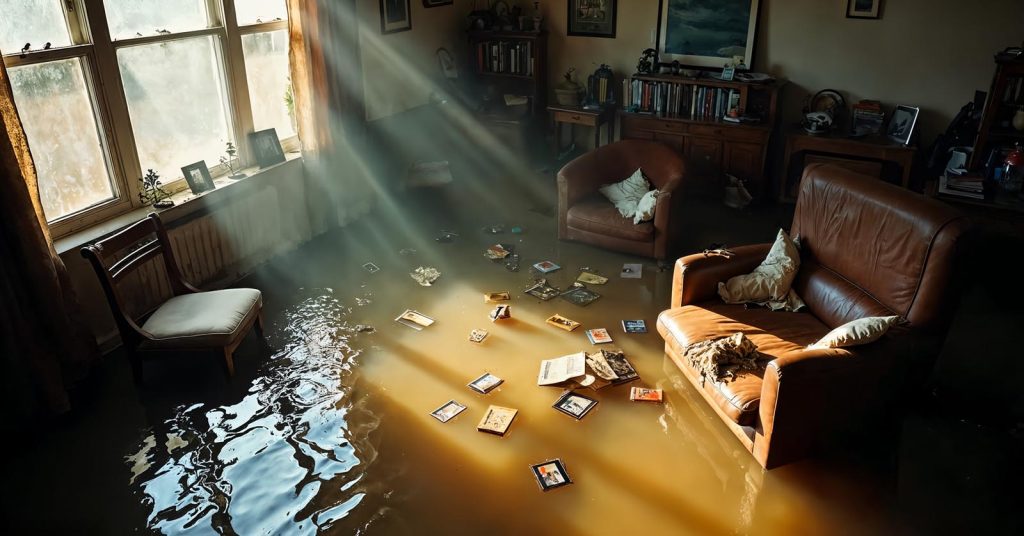
A major home insurance claim creates two bills at once. Your house needs to be repaired, but the household still needs somewhere to sleep, cook, commute, do laundry and keep pets while those repairs are underway.
Temporary-living protection is designed for that second problem. Yet the phrase “additional living expenses” is easy to misunderstand. Loss-of-use coverage does not turn the insurer into the household’s bill payer, nor does it reimburse every temporary expense in full.
Think of loss of use as a bridge between normal living costs and the reasonable extra cost of getting through a covered displacement.
Key Takeaways
- Coverage D pays the increase, not every living expense: ALE is generally designed to cover reasonable costs above what you normally spend while your home is uninhabitable after a covered loss.
- Temporary housing is only part of ALE: Increased food, transportation, laundry, storage, pet boarding and utility setup costs can also qualify when necessary and covered.
- The cause of displacement matters: If the event that makes the home unlivable is excluded, ordinary homeowners ALE may not respond.
- Flood is a major gap: Standard NFIP dwelling coverage excludes additional living expenses and loss of use.
- Coverage D can be broader than ALE: It may also provide fair rental value when a rented part of the residence becomes uninhabitable and limited coverage when civil authority bars access.
- Loss-of-use limits are not standardized nationwide: Policies can have dollar caps, time limits or both, and state law can change consumer protections after disasters.
- Receipts and a normal-spending baseline matter: The insurer may need both to determine how much of a temporary expense is actually additional.
What Is Loss of Use Coverage?
Homeowners policies use Coverage D to help with the extra living costs that arise when a covered loss makes the residence uninhabitable. Loss of use is commonly shown as Coverage D.
Loss-of-use protection can pay additional living expenses or fair rental value when a covered loss makes the insured dwelling uninhabitable. Policies can also provide limited benefits when access is barred by civil authority, subject to the contract.
For an owner-occupied home, the most familiar part is Additional Living Expense (ALE): necessary living expenses incurred so the insured can continue, as nearly as possible, the household’s normal standard of living while the home cannot be occupied after a covered loss.
Money for temporary living costs is separate from the coverage available to repair the house or replace belongings. A large dwelling claim does not automatically consume the loss-of-use limit, and ALE payments do not normally increase the amount available under dwelling coverage.
Within the full Coverages A–F structure, Coverage D sits beside dwelling, personal property and liability protection.
What Additional Living Expenses Can Cover
A covered expense generally needs to arise because you cannot live in the home and must spend more than you normally would to maintain a comparable day-to-day routine.
Eligible expenses can include the following, depending on the policy and circumstances:
- Hotel or motel costs
- Temporary apartment or house rent
- Reasonable restaurant or meal costs above normal food spending
- Extra transportation or commuting costs
- Laundry expenses when normal facilities are unavailable
- Pet boarding required by the temporary housing situation
- Moving and relocation costs
- Storage expenses
- Furniture rental for temporary housing
- Telephone or utility installation at the temporary residence
Expense category alone does not determine whether a cost qualifies. The reimbursable amount is generally the additional, reasonable cost created by the covered displacement.
ALE Pays the Extra Cost, Not Your Entire Household Budget
The distinction between normal and additional spending is the core of the coverage.
ALE does not pay all living expenses. Reimbursement generally focuses on the difference between normal expenses and temporary costs created because the home is unlivable.
The same principle leaves the ordinary mortgage payment with the homeowner. You would have owed that payment even if the covered loss had never happened.
Some regular expenses may fall while you are displaced. Temporary savings in normal household expenses can reduce the net increase used to calculate additional living expenses.
When Does Coverage D Start Paying?
Property damage by itself is not always enough to trigger loss-of-use benefits. A qualifying loss must fit the policy and make the residence uninhabitable—or otherwise satisfy the applicable loss-of-use provision.
Ordinary ALE is generally tied to a covered loss. Covered tornado damage may qualify for temporary living expenses while repairs make the house livable again.
If the underlying cause is excluded, the homeowners ALE provision generally does not create coverage by itself.
Flood Damage
Flood is an important example. Most standard homeowners policies exclude flood, so their loss-of-use coverage usually will not pay simply because an excluded flood makes the home uninhabitable.
Separate flood coverage does not necessarily solve the living-expense problem. The current National Flood Insurance Program dwelling form specifically excludes loss of use and additional living expenses while the insured building is being repaired or cannot be occupied.
An NFIP policy can therefore cover eligible building or contents damage without paying for the hotel or temporary apartment.
The distinction is covered more broadly in Flood Insurance vs. Homeowners Insurance.
Earthquake Damage
Standard homeowners policies also generally exclude earthquake damage. Earthquake coverage or an endorsement may include its own loss-of-use protection, but the terms belong to that earthquake policy rather than ordinary Coverage D.
Separate catastrophe coverage does not automatically duplicate the same ALE terms found in the homeowners policy.
What If You Evacuate but Your Home Is Not Damaged?
Coverage can become more complicated when a government order keeps you out even though the home itself has not suffered physical damage.
Civil-authority provisions can provide limited protection when access to the dwelling is barred. Check the actual contract for the trigger and duration of any prohibited-use or civil-authority provision.
State law can also matter.
California provides a useful example of why national generalizations are risky. Homeowners or renters insurance there may provide additional living expense coverage for a mandatory wildfire evacuation even when the home itself is not damaged, subject to the policy and applicable state protections.
Coverage D Can Also Include Fair Rental Value
Fair rental value can also matter, so this coverage is not limited to the homeowner’s own temporary housing costs.
If part of the insured residence is rented to someone else and a covered loss makes that portion uninhabitable, Coverage D can include fair rental value.
The covered rental value generally reflects the rental value of the part of the residence rented to others while it is uninhabitable because of a covered loss, reduced by expenses that do not continue during that period.
Fair rental value is different from a general business-interruption policy and should not be assumed to cover every form of short-term rental, commercial lodging or rental activity. Your policy’s residence, business and rental provisions still apply.
How Much Loss of Use Coverage Do You Have?
Coverage D does not have one nationwide amount that applies to every homeowner.
Loss-of-use coverage can be limited by dollars, time or both. Texas consumer guidance, for example, shows that many policies there tie additional living expenses to a percentage of dwelling coverage and may also specify a duration; other states and policies use different structures.
California demonstrates the other side of the issue. After certain declared emergencies, state law can require substantially longer ALE availability than a generic national rule would suggest, although a policy’s dollar limit can still be exhausted first.
Check the declarations page and policy for:
- The Coverage D dollar limit
- Any percentage used to derive that limit
- The maximum period of payment
- Different time limits for ALE, fair rental value or civil-authority coverage
- Whether a higher limit or endorsement is available
- How catastrophe-specific or state-law protections affect the policy
A high dwelling limit can produce a substantial Coverage D amount when the policy uses a percentage, but that does not tell you whether the amount is enough for your household.
Temporary housing in a high-cost area, a large family, pets, accessibility needs, school-location requirements or a long reconstruction timeline can make displacement much more expensive than a simple hotel estimate suggests.
How to Document an ALE Claim
Documentation is one of the areas where a homeowner can materially improve the claim process.
Keep receipts for additional costs, and California’s claims guidance similarly tells consumers to preserve bills and receipts for relocation expenses.
After a covered loss:
- Contact the insurer promptly. Confirm that the home is considered uninhabitable and ask how Coverage D will be handled.
- Ask for the limit in writing. Confirm both dollar and time restrictions.
- Ask about advances. Some insurers or state disaster rules may allow or require advance ALE payments in certain circumstances.
- Keep every receipt. Housing, meals, mileage, storage, laundry, pet care and temporary utility costs can become part of the claim file.
- Track normal spending too. The insurer may need a baseline to calculate the increase.
- Separate household and repair expenses. Temporary living costs belong in a different part of the claim from dwelling repairs or personal property.
- Record claim conversations. Keep the adjuster’s name, dates, instructions and any approval of unusual expenses.
- Monitor the remaining limit. A long repair can exhaust Coverage D before construction is complete.
If the overall loss is substantial, how to file a homeowners insurance claim covers the wider claims process, including damage documentation and working with the adjuster.
Five Questions to Ask Before You Need Coverage D
Loss of use is difficult to evaluate for the first time from a hotel room after a disaster. A short renewal review can reveal the important gaps earlier.
- What is my exact Coverage D limit? Use the declarations page, not a generic percentage found online.
- Is there a time limit? Ask what ends first: the restoration period, a stated number of months or the dollar cap.
- What does the policy require for ALE? Clarify “uninhabitable,” reasonable expenses and documentation expectations.
- What happens after an evacuation order? Ask specifically about civil-authority or prohibited-use coverage.
- Could my household realistically live within the limit? Price temporary housing in your area and consider pets, commuting, school and accessibility needs.
Coverage D is not meant to make displacement financially invisible. Its purpose is to prevent a covered property loss from forcing the household to absorb all of the extra cost of living elsewhere while the home is restored.
Understanding the difference between ordinary expenses and additional expenses—and knowing the limit before a claim—makes that protection much easier to use when it matters.
Frequently Asked Questions (FAQs)
Is loss of use the same as additional living expenses?
Additional living expenses are a major part of loss-of-use coverage, but Coverage D can be broader. Depending on the policy, it can also include fair rental value and limited coverage when civil authority prohibits access to the residence.
Does homeowners insurance pay for a hotel if my house is unlivable?
Hotel costs can qualify when a covered loss makes the home uninhabitable and the expense is reasonable under the policy’s ALE terms. The applicable dollar and time limits still matter.
Will ALE pay for all of my restaurant meals?
Not necessarily. ALE generally addresses the reasonable increase above your normal food spending. If you would normally have spent money on groceries, that baseline can be considered when the insurer calculates the additional cost.
Does loss of use pay my mortgage?
Generally no. Mortgage payments are expenses you would have owed even without the loss. Coverage D is designed for the extra costs created by displacement.
Does flood insurance pay additional living expenses?
Standard NFIP dwelling coverage does not. The NFIP Standard Flood Insurance Policy excludes temporary housing, loss of use and additional living expenses.
Can homeowners insurance pay ALE during a mandatory evacuation?
Potentially, but the answer depends on the policy and state. Civil-authority or prohibited-use provisions can fall within Coverage D, and some states provide additional protections for certain disaster evacuations.
What is fair rental value coverage?
It can reimburse covered rental value lost when a part of the insured residence that you rent to others becomes uninhabitable after a covered loss, generally reduced by expenses that do not continue.
How long will additional living expense coverage pay?
Coverage D has no nationwide duration that applies to every policy. Policies can have a dollar limit, time limit or both, and state law can affect the available period after certain disasters. Check the actual Coverage D terms.
Sources
- National Association of Insurance Commissioners: What Are Additional Living Expenses and How Can Insurance Help?, January 2025
- National Association of Insurance Commissioners: Consumer Homeowners Insurance — Additional Living Expense
- National Association of Insurance Commissioners: Coverage D — Loss of Use definition, December 2025
- Washington Office of the Insurance Commissioner: Additional Living Expenses Coverage
- California Department of Insurance: Residential Property Claims Guide — Additional Living Expenses
- California Department of Insurance: Evacuation Checklist for Policyholders
- California Department of Insurance: Additional Living Expense Coverage After Wildfire, 2025
- Texas Department of Insurance: Home Insurance Guide — Additional Living Expenses, updated 2026
- National Flood Insurance Program: Flood Policy Terms and Excluded Additional Living Expenses
- Federal Emergency Management Agency: NFIP Standard Flood Insurance Policy Commentary, June 2025