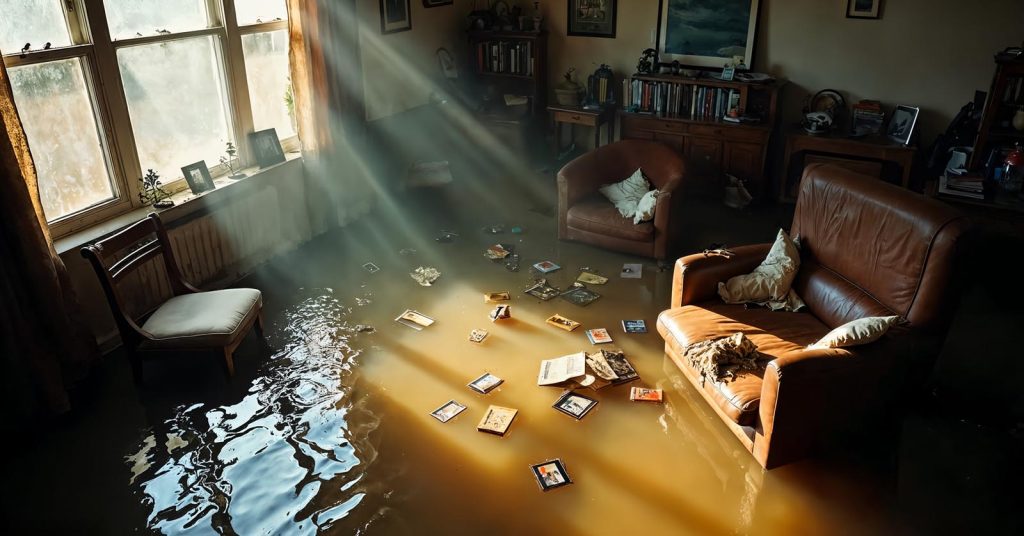
Homeowners insurance is easy to think of as protection for the house. Yet one of its most financially important sections may have nothing to do with repairing the building.
A serious injury, an accident that damages someone else’s property or a lawsuit alleging negligence can create costs far beyond a broken window or a damaged floor. Third-party liability risk is the focus of Coverage E.
Liability claims ask different questions from property claims: Were you legally responsible? Is the event within the policy’s liability coverage? Does an exclusion apply? And is the liability limit large enough for the potential claim?
Key Takeaways
- Coverage E is third-party protection: It can respond when you are legally responsible for bodily injury to another person or damage to another person’s property.
- Legal defense can be a major part of the benefit: Homeowners liability coverage normally provides a defense for covered claims as well as payment of covered damages, subject to the contract.
- The protection can follow you away from home: Homeowners personal liability can apply beyond the insured premises, although important exclusions and policy limits still apply.
- Auto, business and intentional acts are major gaps: Those exposures generally require other insurance or fall outside ordinary homeowners liability coverage.
- Pets and recreational features deserve a specific review: Insurers can treat dogs, pools, trampolines and similar risks differently, including through exclusions or underwriting restrictions.
- Coverage E and Coverage F are not interchangeable: Medical Payments to Others can pay limited medical expenses without establishing legal liability, while Coverage E is built around covered liability claims.
- Your liability limit is a separate decision: It should reflect your financial exposure and the size of a plausible serious claim, not simply the value of the house.
What Is Personal Liability Coverage?
Homeowners policies commonly label the personal-liability section Coverage E. It is commonly shown as Coverage E — Personal Liability.
Coverage E can protect against covered financial losses when you or another insured household member is legally responsible for injury to someone else or damage to their property. Covered claims can also include a legal defense, subject to the policy.
In practical terms, Coverage E can become relevant when someone alleges that your negligence or another covered action caused:
- Bodily injury
- Damage to another person’s property
- A resulting lawsuit or demand for compensation
Personal liability coverage works differently from the sections that repair your home or replace your possessions. Within the Coverages A–F structure, this protection appears under Coverage E.
What Can Homeowners Personal Liability Cover?
No single list can capture every accident that can create liability, but several scenarios show how the coverage works.
Someone Is Injured on Your Property
Suppose a guest is injured and alleges that a hazardous condition you failed to address caused the accident. If you are legally responsible and the claim is covered, Coverage E can help with covered damages and the legal defense.
Simply being injured at your house does not automatically prove that you owe damages. Liability depends on the facts and applicable law. Your insurer evaluates the claim under the policy rather than treating every accident as an automatic Coverage E payout.
You Accidentally Damage Someone Else’s Property
Property damage to someone else can also trigger liability coverage when the accident is covered. Responsibility to a third party—not damage to your own property—is the relevant question.
A Household Member Causes a Covered Loss
Homeowners liability protection can extend to resident family members who qualify as insureds under the policy. The exact definition of an insured depends on the contract and applicable state rules.
Who qualifies as an insured depends on the policy definition. Do not assume that every person staying at the residence, roommate, tenant or relative automatically has the same protection.
Your Pet Injures Someone
Pet-related liability can fall within homeowners coverage in some situations, but policy-specific review is essential. Underwriting treatment varies by insurer, and some policies may exclude or restrict liability for dog-bite claims.
Breed rules, animal history, state law and insurer underwriting can all matter. A large Coverage E limit on the declarations page does not override a specific animal-liability exclusion.
Does Personal Liability Coverage Apply Away From Home?
Often, yes.
Personal liability protection can follow the insured beyond property they own or rent, but important exclusions apply, including many auto and boating exposures.
Where the accident happens is not always what determines coverage. Covered personal activity away from home may still create a homeowners liability claim.
Do not extend that principle to every activity away from home. Motor vehicles, business operations, certain watercraft and other exposures can be carved out and insured elsewhere.
What Personal Liability Coverage Usually Does Not Cover
This section provides broad personal liability protection, not universal liability insurance.
Auto-Related Liability
Homeowners insurance generally is not the policy for liability arising from ordinary automobile use. Auto-related claims are a major exception to homeowners personal liability protection.
Auto insurance primarily addresses that exposure. Newer transportation categories can be more complicated because homeowners and auto policies may both contain restrictions affecting e-scooters and other nontraditional vehicles.
Business Liability
A personal homeowners policy should not be assumed to insure a business simply because the work occurs at home.
Business-related lawsuits are commonly outside ordinary personal liability coverage, and many home-business owners need separate property and liability protection.
If clients visit the home, employees work there, products are sold, professional services are provided or business equipment is significant, review the exposure before relying on Coverage E.
Intentional Acts
Intentional acts are generally outside the protection of ordinary homeowners liability coverage. Insurance is designed around covered accidents and liability risks, not as a way to transfer the financial consequences of deliberately causing harm.
Your Own Injuries or Damage to Your Own Property
Liability to other people is the focus of Coverage E. Damage to your own house or belongings belongs under the applicable property coverage, while your own medical care is not converted into a liability claim against your homeowners policy merely because the injury happened at home.
Other exclusions and limitations can apply. What Does Homeowners Insurance Not Cover? addresses the broader exclusion framework, but the liability section of your own contract is what controls a specific claim.
Coverage E vs. Medical Payments to Others
Personal liability and Medical Payments to Others can both appear after an injury, but they solve different problems.
| Feature | Coverage E: Personal Liability | Coverage F: Medical Payments to Others |
|---|---|---|
| Main purpose | Protect against covered legal liability for injury or property damage | Pay limited eligible medical expenses after certain accidental injuries |
| Legal responsibility required? | Liability is central to the claim | Can pay regardless of legal liability |
| Property damage | Can be covered | Not its purpose |
| Legal defense | Can be provided for a covered liability claim | Not the purpose of the coverage |
| Injured household insureds | Not designed as personal health coverage | Generally does not cover injuries to insured household members |
Medical Payments to Others can cover limited medical bills for people injured on the property or, in some circumstances, by the homeowner’s family or pets. Payment can often be made without first establishing legal liability.
Coverage F can be useful for relatively limited medical-expense situations, but it is not a substitute for the larger liability protection in Coverage E.
How Much Personal Liability Coverage Should You Have?
Your Coverage E limit is generally selected separately rather than calculated directly from the home’s reconstruction cost. Medical-payments limits are also typically chosen independently from property limits that may be tied to Coverage A.
The more useful question is how much personal financial exposure you have, not how much the house is worth.
Consider:
- Income and assets that could be exposed to a serious liability claim, subject to applicable state protections
- How much legal defense and damages a severe injury could generate
- Whether you have a dog or other animal exposure
- A swimming pool, trampoline or other recreational feature
- Frequent visitors or activities at the property
- Rental, volunteer, recreational or other activities that may create liability outside the home
- Whether your auto and other liability limits coordinate with an umbrella policy
Pools, trampolines and other higher-liability features are reasons to reassess whether the standard homeowners limit is enough. An umbrella policy can provide additional liability protection above underlying home or renters limits.
Broader homeowners coverage sizing should consider liability alongside dwelling, property and loss-of-use limits.
When an Umbrella Policy Becomes Relevant
A personal umbrella policy adds another layer of liability protection above underlying policies such as homeowners and auto insurance.
An umbrella policy can extend liability protection beyond the limits of the underlying homeowners and auto policies and may cover certain additional liability exposures, depending on the umbrella contract.
Umbrella coverage deserves consideration when the loss you are trying to protect against could realistically exceed the homeowners liability limit.
For example, a severe injury claim can involve medical costs, lost income, long-term impairment and legal expenses. The issue is not whether such a result is likely on an ordinary day; it is whether the household could absorb the financial impact if a low-frequency, high-severity claim occurred.
An umbrella policy is not extra dwelling or personal-property insurance. It provides liability protection and has its own exclusions, conditions and underlying-insurance requirements. Compare the actual contracts rather than treating “$1 million umbrella” as a guarantee that every liability gap disappears.
Risks That Should Trigger a Policy Review
Some changes in the household can materially change liability exposure without changing the physical value of the home.
Contact the insurer or agent when you:
- Add a swimming pool or trampoline
- Get a dog or another animal with meaningful liability exposure
- Start a business from home
- Begin renting or commercially using part of the property
- Buy recreational vehicles or watercraft
- Take on activities that create liability away from the residence
- Experience a significant increase in assets or income
- Want to add an umbrella policy
Review liability protection as risks change. Coverage gaps deserve separate attention because the problem may be an exclusion rather than an insufficient dollar limit. Raising Coverage E cannot fix a claim category that the policy does not cover.
Other gaps may require a different policy or homeowners endorsement, depending on what the base contract excludes and what the insurer offers in that state.
What to Do When a Liability Incident Happens
If an accident could turn into a liability claim, the early objective is to protect people and preserve accurate information, not decide liability on the spot.
- Handle emergencies first. Get appropriate medical or emergency assistance.
- Document what happened. Record the location, conditions, people involved and relevant photos or video when safe and appropriate.
- Preserve communications. Keep letters, emails, medical demands and legal papers.
- Notify the insurer promptly. Liability policies contain notice and cooperation requirements.
- Forward legal documents immediately. A lawsuit or formal demand can carry deadlines.
- Cooperate with the claim investigation. The insurer will need facts to determine coverage and liability.
- Do not assume the claim is covered or excluded yourself. Ask for the insurer’s coverage position under the actual policy.
A liability claim can be more complex than a straightforward property claim because insurance coverage and legal responsibility are separate questions. The fact that an accident happened does not automatically establish negligence, and the fact that someone alleges negligence does not automatically mean the policy covers every resulting demand.
A Better Way to Review Coverage E
At renewal, check more than the number next to “Personal Liability.”
Read the policy with five questions in mind:
- Who is insured? Confirm how the policy treats spouses, resident relatives, children away from home and other household arrangements that matter to you.
- What activities are excluded? Pay particular attention to motor vehicles, watercraft, business activities and intentional acts.
- Are there specific animal or property restrictions? Do not assume a pet, pool or recreational feature is fully covered.
- What is the liability limit? Decide whether it matches the household’s current financial exposure.
- Would an umbrella improve the risk transfer? Compare the homeowners, auto and umbrella limits and exclusions together.
Personal liability coverage is valuable because one accident can create a claim much larger than the physical damage visible at the scene. But its usefulness depends on the match between the activity, the policy language and the limit you selected.
Frequently Asked Questions (FAQs)
What is Coverage E in homeowners insurance?
Most homeowners declarations label personal liability as Coverage E. It can protect an insured against covered claims alleging legal responsibility for bodily injury to another person or damage to someone else’s property.
Does homeowners liability insurance cover lawsuits?
For a covered liability claim, homeowners insurance normally can provide a legal defense and pay covered damages subject to the policy terms and limits. An excluded claim may not receive that protection.
Does personal liability coverage only apply at my house?
No. Personal liability can extend beyond the insured premises, although important exceptions such as auto-related liability apply.
Does homeowners insurance cover a dog bite?
Potentially, but do not assume every policy does. Insurers may impose animal restrictions or dog-liability exclusions, and underwriting practices vary. Check your policy for the specific animal exposure.
Does Coverage E pay my own medical bills?
Your own medical bills are not what Coverage E is designed to cover. Personal liability coverage addresses covered liability to others; personal medical expenses generally belong under health insurance or another applicable coverage.
What is the difference between Coverage E and Coverage F?
Coverage E addresses covered legal responsibility for bodily injury or property damage and is commonly labeled Personal Liability on the policy. Medical Payments to Others, or Coverage F, can pay limited eligible medical expenses without first proving that the insured was legally responsible.
Does homeowners personal liability cover a home business?
Do not assume it does. Business-related liability is commonly excluded or restricted under personal homeowners policies, so a home business may need an endorsement or separate business insurance.
Do I need umbrella insurance if I have homeowners liability coverage?
Not everyone needs the same liability limit. Umbrella coverage may be useful when a serious covered claim could exceed your homeowners or other underlying liability limits. Review the umbrella’s own exclusions and requirements before buying it.
Sources
- National Association of Insurance Commissioners: Homeowners Insurance, updated October 2025
- National Association of Insurance Commissioners: Consumer Homeowners Insurance — Types of Coverage
- National Association of Insurance Commissioners: Understanding Your Homeowners or Renters Policy
- National Association of Insurance Commissioners: What’s an Umbrella Policy?
- California Department of Insurance: Residential Insurance — Coverage E Personal Liability
- Massachusetts Division of Insurance: Understanding Home Insurance — Personal Liability
- Massachusetts Division of Insurance: Homeowners Insurance FAQs — Pet Liability
- South Carolina Department of Insurance: Types of Coverage in a Homeowner’s Insurance Policy
- Washington Office of the Insurance Commissioner: Insurance and Your Home Business