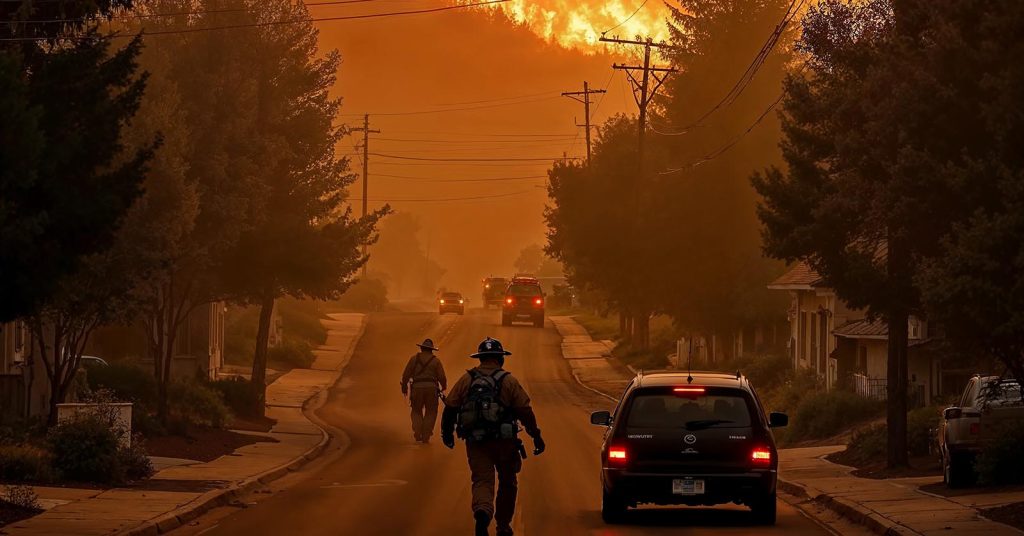
Wildfire insurance is less about finding a special policy with “wildfire” in the name and more about understanding whether ordinary homeowners coverage is available at all.
For many homeowners, fire itself is straightforward: a standard policy usually covers it. Difficulty increases when wildfire risk affects underwriting, premiums, renewal decisions, rebuilding costs and access to the private market.
Does Homeowners Insurance Cover Wildfires?
Usually, yes.
Homeowners and renters policies typically cover damage from wildfire, smoke, soot and ash, subject to the policy’s limits, deductibles and exclusions.
For a homeowner, that can include:
- Damage to the house itself
- Damage to covered detached structures
- Damage to personal belongings
- Smoke, soot, and ash damage
- Additional living expenses when the home becomes uninhabitable after a covered loss
Exact limits and settlement terms still come from the policy. Covered wildfire does not eliminate deductibles, coverage limits, depreciation, exclusions, or documentation requirements.
What Parts of the Policy Matter Most After a Wildfire?
A total or near-total wildfire loss can stress several sections of the homeowners policy at once.
| Coverage | Why it matters in a wildfire |
|---|---|
| Dwelling | Pays to repair or rebuild covered damage to the house, up to applicable limits and terms |
| Other structures | Can cover detached garages, sheds, fences, and other eligible structures |
| Personal property | Covers eligible belongings damaged or destroyed by fire, smoke, soot, or ash |
| Loss of use | Can help with qualifying additional living costs while the home is uninhabitable |
| Ordinance or law | Can help with certain added costs required to rebuild to current building codes |
| Extended or guaranteed replacement cost | May provide additional rebuilding protection beyond the base dwelling limit, depending on the policy |
Your dwelling limit deserves particular attention in wildfire-prone areas because a major regional event can increase demand for labor and materials. Rebuilding cost is separate from the home’s market value, and the process for estimating homeowners insurance needs should focus on reconstruction rather than the purchase price.
Smoke and Ash Damage Can Be Covered Even Without Flames
Your home does not have to burn to suffer a covered wildfire loss.
Sudden and accidental smoke damage, including ash, is typically covered under homeowners and renters policies when the loss otherwise meets the contract terms. Smoke can damage walls, HVAC systems, furniture, clothing, electronics and indoor air quality even when flames never reach the property.
Depending on the damage, coverage can include cleaning, deodorizing, repair, or replacement of covered property.
That does not mean every odor or residue automatically produces a covered claim. The insurer can investigate whether there is actual physical or chemical damage, and coverage remains subject to the policy.
After the 2025 Southern California fires, the California Department of Insurance specifically instructed insurers to fully investigate smoke-damage claims rather than reject them without an adequate investigation.
Additional Living Expenses Can Be Crucial
Recovery after a wildfire can take much longer than replacing a few damaged belongings.
Loss-of-use coverage—often called Additional Living Expenses or ALE—can pay the increase in reasonable living costs when a covered loss makes the home unsafe or uninhabitable.
Depending on the policy and circumstances, eligible expenses can include:
- Temporary housing
- Additional meal costs
- Pet boarding
- Laundry
- Storage
- Extra transportation
- Certain relocation expenses
ALE normally pays the additional amount above what the household would have spent anyway, rather than replacing normal expenses such as the mortgage.
Evacuation orders can trigger loss-of-use protection under some home and renters policies. California has additional state-specific protections for wildfire-related ALE, but those rules should not be assumed to apply nationwide.
Replacement Cost Becomes More Important After a Total Loss
Valuation differences between replacement cost and actual cash value are easy to overlook until a major contents loss occurs.
If covered belongings are insured at actual cash value, depreciation can reduce the initial settlement substantially. Replacement-cost coverage can provide more money to replace eligible property with new equivalents, subject to the policy’s settlement process.
Dwelling settlement terms deserve the same attention.
Homeowners should check whether they have:
- Replacement-cost dwelling coverage
- Extended replacement cost
- Guaranteed replacement cost, where offered
- Ordinance or law coverage
- Inflation adjustments
These are not interchangeable. Extended replacement cost typically adds a stated amount or percentage above the dwelling limit, while guaranteed replacement cost can provide broader protection under the policy’s terms.
Wildfire policy review should therefore look beyond whether “fire” appears on the covered-perils list.
Why High-Risk Homes Can Be Difficult to Insure
Coverage for wildfire losses and willingness to insure a wildfire-exposed property are two different questions.
Insurers can generally consider wildfire exposure when deciding whether a home meets its underwriting criteria, subject to state insurance laws and approved rating rules.
Factors can include:
- Wildfire hazard at the property’s location
- Vegetation and surrounding fuels
- Distance from neighboring structures
- Roof and exterior construction
- Access for emergency responders
- Water availability
- Prior losses
- Community-level wildfire exposure
- Mitigation features
Availability problems are not limited to California. Regulators nationwide are increasingly tracking nonrenewals, residual-market growth, mitigation, deductibles and coverage availability.
One of the clearest examples of wildfire pressure reshaping a home-insurance market comes from California.
What If Standard Homeowners Insurance Is Unavailable?
Shop broadly rather than assuming the first rejection means there is no private-market option.
An independent agent or broker may have access to insurers that use different underwriting criteria. Depending on the state, surplus-lines insurers may also be available for risks that standard admitted insurers will not accept.
If the regular market is unavailable, a state residual-market mechanism may provide another option.
FAIR Plans—Fair Access to Insurance Requirements Plans—are state-mandated property insurance mechanisms intended to provide coverage for properties that cannot obtain insurance in the standard market. As of October 2024, NAIC reported that 33 states had some form of residual property market.
Those programs vary widely.
California FAIR Plan Example
California’s FAIR Plan is specifically designed for properties that have difficulty obtaining coverage in the private market because they are considered high risk.
The standard California FAIR Plan policy provides basic property coverage rather than a complete homeowners policy. Core coverage can include fire or lightning, internal explosion and smoke. Certain additional perils can be added for extra premium, but traditional homeowners protections such as liability and theft are not automatically included.
Policyholders may pair a basic FAIR Plan policy with a private Difference in Conditions policy to fill some coverage gaps.
That structure is California-specific. Residual-market coverage in another state can look very different.
Wildfire Mitigation Can Affect More Than Safety
Reducing the chance that the house ignites is valuable even if it never changes the insurance premium.
It can also affect insurance availability or pricing in some markets.
California’s Safer from Wildfires program requires participating insurers to recognize specified wildfire-mitigation actions in their rating plans. Each listed action can qualify for an insurance discount, although the size of the discount varies by insurer.
The program focuses on three layers of protection: the structure, the immediate surroundings, and the community.
Wildfire protection works best when vulnerabilities are addressed together rather than treated as isolated upgrades.
Its current Wildfire Prepared Home standard focuses on measures such as:
- Class A roof coverings
- Keeping roofs and gutters clear of vegetative debris
- Ember- and flame-resistant vents or appropriate metal mesh
- Noncombustible materials immediately adjacent to vulnerable parts of the structure
- Defensible space
- Reducing combustible materials near the home
Wind-blown embers are a leading cause of home ignition during wildfires, which is why vents, roofs, gutters, fences, decks, mulch and the area immediately around the structure receive so much attention.
Do Mitigation Upgrades Guarantee Cheaper Insurance?
No.
Discounts, underwriting treatment, and eligibility vary by insurer and state. Even the IBHS Wildfire Prepared program cautions that an insurance discount is not guaranteed.
Before spending substantial money primarily for insurance savings, ask the insurer:
- Which mitigation features it recognizes
- Whether proof or inspection is required
- Whether the improvement affects eligibility, premium, or both
- When any discount would begin
- Whether a formal designation is required
Physical risk reduction can still be worthwhile even when the premium does not change immediately.
What to Check Before Wildfire Season
A useful wildfire insurance review can be done before smoke is already in the air.
- Confirm fire coverage. Verify that wildfire is not restricted by an unusual endorsement.
- Review the dwelling limit. Compare it with a credible reconstruction estimate.
- Check replacement-cost terms. Review both the structure and belongings.
- Read the loss-of-use limit. Consider how long rebuilding could take.
- Check ordinance or law coverage. Older homes may face substantial code-upgrade costs after a total loss.
- Update the home inventory. Photos, video, model numbers, receipts, and other records can make a large contents claim easier to document.
- Document mitigation. Keep invoices, photographs, inspection reports, and certifications for completed wildfire-hardening work.
- Read the renewal package. Look for changes to deductibles, limits, valuation, or endorsements.
If the renewal terms are confusing, the declarations page is only the starting point. Definitions, exclusions, conditions, and endorsements determine how the insurance policy actually works.
What to Do After a Wildfire
Safety comes before insurance documentation.
Do not return to a wildfire-damaged property until local authorities say it is safe. Burn areas can contain unstable structures, downed power lines, hot spots, toxic ash, damaged utilities and other hazards.
Once it is safe:
- Contact the insurer. Report the loss and ask what documentation is needed.
- Photograph what you safely can. Capture structural damage, smoke or ash contamination, damaged property, and surrounding conditions.
- Request the complete policy if needed. Review dwelling, belongings, ALE, and any extended replacement-cost coverage.
- Track additional living expenses. Save receipts and separate extra costs from normal household spending.
- Create or reconstruct the contents inventory. Use photos, videos, receipts, emails, purchase histories, and other records.
- Get rebuilding information. Contractor estimates can help compare actual rebuilding costs with the insurer’s estimate and policy limits.
- Keep a claim record. Save emails, estimates, payment explanations, and notes from conversations.
The broader steps for filing a homeowners insurance claim apply to wildfire losses as well, although catastrophic events can create longer timelines and unusually high demand for contractors and temporary housing.
Wildfire Coverage Checklist for High-Risk Homes
| Question | Why it matters |
|---|---|
| Is wildfire covered? | Standard policies usually cover fire, but verify the actual contract |
| Is the dwelling limit enough to rebuild? | A total loss exposes underinsurance immediately |
| Do I have extended or guaranteed replacement cost? | These features may add protection above the base dwelling limit |
| Are belongings RCV or ACV? | Depreciation can significantly reduce contents settlements |
| How much ALE is available? | Wildfire rebuilding and displacement can last a long time |
| Does the insurer recognize mitigation? | Some upgrades can affect premium or eligibility |
| What happens at renewal? | High-risk homes can face changing premiums, restrictions, or availability |
| What is the backup market? | Know whether your state offers a FAIR Plan or another residual mechanism |
Wildfire coverage is strongest when three pieces line up: the policy covers the loss, the limits are large enough to rebuild, and the insurance remains available before the disaster occurs.
Frequently Asked Questions (FAQs)
Does homeowners insurance cover wildfire damage?
Standard homeowners policies typically cover damage caused by wildfire, including direct fire damage and qualifying smoke, soot, and ash damage. Coverage remains subject to policy limits, deductibles, exclusions, and settlement terms.
Do I need separate wildfire insurance?
Usually not if a standard homeowners policy covers fire. In high-risk areas, the harder problem is often finding or keeping a homeowners policy rather than adding a separate wildfire policy.
Does homeowners insurance cover wildfire smoke damage?
Typically, sudden and accidental smoke, soot, and ash damage from a wildfire can be covered. Your insurer may investigate whether the property suffered actual covered damage and what cleaning, repair, or replacement is necessary.
Can insurance pay for a hotel during a wildfire?
Loss-of-use or Additional Living Expense coverage can help with qualifying extra living costs when a covered wildfire makes the home uninhabitable. Some policies and state rules can also address mandatory evacuation situations.
What is a FAIR Plan?
A FAIR Plan is a state residual-market mechanism intended to provide property insurance when coverage is unavailable in the regular market. Eligibility, limits and available options vary by state, and residual-market coverage can be narrower than a traditional homeowners policy.
Does wildfire mitigation lower homeowners insurance?
Sometimes. Discounts and underwriting treatment vary by state and insurer. California requires insurers to recognize specified mitigation measures in rating plans, while other states and insurers use different programs.
Can an insurer refuse to insure a home because of wildfire risk?
Insurers can use underwriting standards permitted by state law when deciding whether to offer or renew coverage. Rules governing nonrenewal, cancellation, rates, risk models, and mitigation vary by state.
Does home insurance cover a car destroyed by wildfire?
No. Homeowners insurance does not generally cover an automobile. Wildfire damage to a vehicle is typically handled under comprehensive auto coverage if that coverage was purchased.
Sources
- National Association of Insurance Commissioners: What Should I Do After a Wildfire?
- National Association of Insurance Commissioners: Fair Access to Insurance Requirements Plans
- National Association of Insurance Commissioners: Nationwide Homeowners Market Data Call, March 2026
- Washington Office of the Insurance Commissioner: Smoke Damage and Your Homeowner or Renter Insurance
- Washington Office of the Insurance Commissioner: Steps to Take After Home Damage or a Loss
- California Department of Insurance: Safer from Wildfires
- California Department of Insurance: Residential Insurance Guide
- Insurance Institute for Business & Home Safety: Wildfire Prepared Home Technical Standard