A grocery budget can feel harder to control than rent or insurance because the total is rebuilt one cart at a time.
That makes grocery shopping vulnerable to dozens of small decisions: package size, brand, convenience, sale pricing, leftovers, bulk deals, and food that looked useful in the store but never became a meal.
An effective grocery system reduces the expensive mistakes you repeat each week rather than trying to win every aisle.
Check the Food You Already Have Before Shopping
Before writing a shopping list, check the refrigerator, freezer, and pantry.
Plan meals around what is already at home, estimate how many meals you will actually eat there, and put quantities on the shopping list to reduce overbuying. Bulk deals only save money when you can use or preserve the larger quantity before it spoils.
A simple planning routine is:
- Choose three to five main meals. You do not have to plan every bite of the week.
- Build meals around overlapping ingredients. Spinach can go into eggs, pasta, and a side dish instead of being purchased for one recipe.
- Check what needs to be used first. Make at least one meal around open, ripe, or near-date food.
- Leave room for reality. If you normally eat out once or twice, do not shop as though you will cook seven dinners.
- Write quantities, not just ingredients. “Two onions” is more useful than “onions.”
Food Plans published by USDA can provide context for what a nutritious at-home food pattern may cost at different spending levels. Treat those plans as reference points, not as a personal grocery cap. Household size, location, diet, food access, and how much you cook at home can make your actual number different.
Set a Grocery Target From Your Own Receipts
Useful grocery targets start with what your household actually spends.
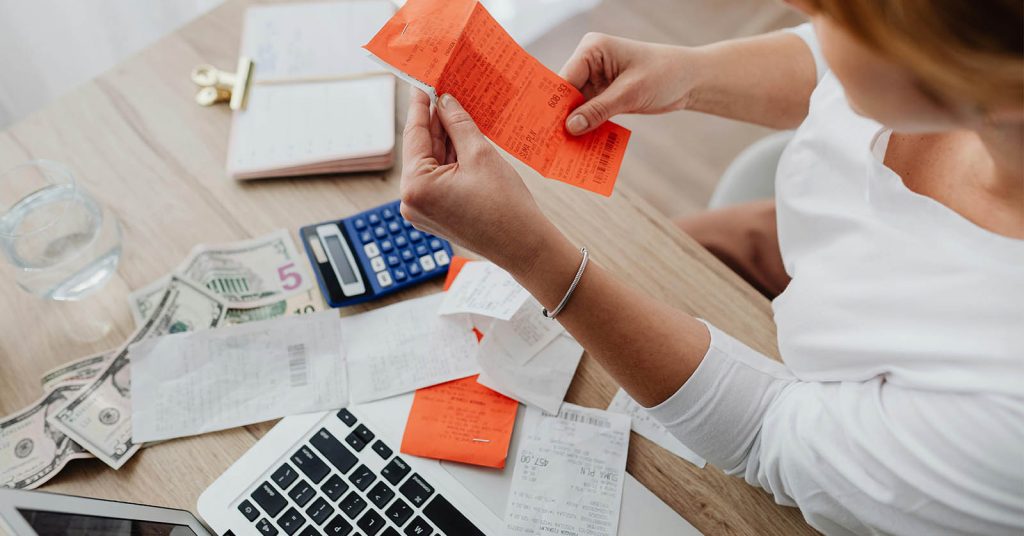
Look at four to eight weeks of supermarket, warehouse, grocery-delivery, and food-market transactions. Separate groceries from restaurant and takeout spending so the number reflects the category you are trying to manage.
Then ask:
- What is the normal weekly range?
- Which weeks were unusually high, and why?
- Did stock-up purchases lower later weeks or simply increase total spending?
- How much food was discarded?
- Were convenience purchases repeatedly replacing planned meals?
A household averaging $210 a week may struggle with an immediate jump to $120; the plan can fail by Thursday. Start smaller—for example, by reducing repeat waste and cutting one or two expensive habits—to learn where the realistic floor is. For the broader cash-flow picture, the Monthly Budget Calculator can show how groceries fit with other household categories.
Do not anchor the budget to an old inflation statistic. Food prices change by category and location, and a national CPI number does not tell you what your household will pay for this week’s cart. Your recent receipts are the better operating baseline.
Compare Unit Price, Not the Word “Value”
Package price alone can be misleading when one container is 12 ounces and another is 20.
Use unit price — cost per ounce, pound, quart, count, or another common unit — whenever packages differ in size.
$4.80 ÷ 16 = 30¢ per ounce
$6.30 ÷ 24 = 26.25¢ per ounce
The larger package has the lower unit cost, but only if you will use the extra food.
Shelf labels often provide unit pricing, but formats can differ by retailer and location. When the displayed units are inconsistent, use your phone calculator and convert the packages to the same unit.
Unit price is especially helpful for:
- cereal and oats;
- rice and pasta;
- yogurt and cheese;
- canned goods;
- paper and household products sold in the grocery store;
- frozen foods; and
- meat sold in different package sizes.
It also exposes shrinkflation automatically. If the package gets smaller while the shelf price stays similar, the unit price shows the increase.
Store Brand vs. Name Brand: Test the Product, Not the Percentage
Store brands can reduce a grocery bill, but there is no reliable universal rule that they are always 15%, 20%, or 25% cheaper.
Prices vary by retailer, product, promotion, package size, and location. Sometimes the private-label item wins easily; sometimes a sale or coupon makes the name brand cheaper.
Use a three-step comparison:
- Compare unit price.
- Try the lower-cost version once.
- Keep it only if the quality works for your household.
Staples are a good testing ground because brand differences may matter less to you for items such as flour, canned beans, frozen vegetables, rice, or basic dairy products. Other foods may have enough difference in taste, texture, ingredients, or performance that paying more is worth it.
Brand flexibility is useful because it keeps you from paying a premium automatically. It does not require pretending all products are identical.
Bulk Buying Saves Money Only When the Food Gets Used
Warehouse packs and buy-one-get-one promotions can produce a low unit price and still increase the grocery bill.
Buying in large quantities saves money only when the household can use or preserve the food before it spoils.
Before buying bulk, ask:
- Is the unit price actually lower?
- How quickly does the household use this item?
- Can part of it be frozen?
- Do you have enough storage?
- Will having more at home cause faster consumption?
- Does a membership fee change the real cost?
Bulk purchases are easiest to justify for items with predictable use and long storage lives. They require more caution for produce, bakery products, sauces opened infrequently, and foods you are buying mainly because the package looks like a deal.
For perishable proteins, portion and freeze what you will not cook soon. Labeling packages with the item and freeze date makes the freezer more useful and reduces the chance that today’s bargain becomes an unidentified block of food six months later.
Use Fresh, Frozen, and Shelf-Stable Foods Strategically
Grocery planning does not require choosing between “fresh” and “cheap.” Different forms of the same food solve different problems.
Fresh produce can be excellent when you know when you will use it. Frozen vegetables and fruit can reduce prep work and allow you to use only the amount required. Canned beans, tomatoes, fish, and other shelf-stable staples can make it easier to assemble a meal without another trip to the store.
The budget question is not which form is universally best. Ask which version gives you the lowest usable cost.
This is also where convenience can be financially rational. Pre-cut frozen vegetables may cost more per pound than whole fresh vegetables but can still cost less than last-minute takeout on a night when cooking time is limited.
Keep several low-effort meals in the house—pasta and sauce, eggs and toast, frozen vegetables with rice, soup ingredients, or another combination your household will genuinely eat. Backup meals only work when they are easier than ordering food.
Date Labels: Quality Is Not the Same as Safety
Date labels cause unnecessary food waste when every printed date is treated as an expiration deadline.
“Best if Used By” is generally a quality date: flavor or quality may decline afterward, but the date does not automatically mean the food has become unsafe. Voluntary use of that phrase has been encouraged by federal food-safety agencies to reduce consumer confusion.
Other wording can appear on food labels, and storage history matters. Safe handling, refrigeration, and common signs of spoilage matter more than treating the printed date as a stand-alone safety test.
For storage questions, FoodSafety.gov’s FoodKeeper provides guidance for hundreds of foods in the refrigerator, freezer, and pantry.
Food-safety rules also matter independently of labels. FoodSafety.gov recommends the basic Clean, Separate, Cook, and Chill practices and provides current cold-storage and safe-temperature guidance.
A Dented Can Is Not Automatically Unsafe — Severe Damage Is the Red Flag
Container damage needs a more precise safety check than treating every dent or spot of rust as equally risky.
Serious container damage is different. Never use cans that are leaking, bulging, badly dented, deeply rusted, punctured, cracked, or otherwise severely damaged; containers that spurt liquid when opened or food with a foul odor also call for disposal.
Minor cosmetic dents are not the same as a badly damaged seam or a crushed can. When you cannot tell whether the damage is superficial—especially around a seam, lid, or rim—skipping the can is the safer choice.
Tasting food from a suspicious container is not a safe way to evaluate it.
Similar logic applies when shopping markdown shelves: a lower price is not a bargain if packaging integrity is questionable.
Make Food Waste Visible Before You Chase More Coupons
Realistic meal plans, appropriate quantities, correct storage, and deliberate use of leftovers can reduce the share of purchased food that never becomes a meal.
A simple weekly waste check takes less than a minute:
- What did we throw away?
- Why did it not get eaten?
- Was too much food purchased?
- Did it get hidden in the fridge?
- Were the planned meals too time-consuming for the week you actually had?
Then change the next list.
Create one visible “use first” area in the refrigerator. Move open products, ripe produce, leftovers, and ingredients that should be cooked soon into that area. Plan one flexible meal that can absorb those ingredients.
Freezing is useful too. FoodSafety.gov notes that freezer storage times are primarily about quality when food remains continuously frozen at 0°F or below, while refrigerator limits are more important for preventing food from becoming unsafe.
Zero waste is not required. Focus on avoiding the same repeated pattern of buying food and throwing away the same portion each week.
SNAP Grocery Rules Can Now Differ by State
SNAP has traditionally covered a broad range of foods for the household, including categories such as fruits and vegetables, meat and poultry, dairy products, breads and cereals, snack foods, nonalcoholic beverages, and seeds or plants that produce food.
However, consumers should no longer assume that every participating state has exactly the same eligible-food rules.
Several states now have approved SNAP food restriction waivers, with implementation dates and restricted products that vary by state. Retailer-compliance guidance issued in 2026 addresses how those waivers apply, including to online orders and deliveries. As the waivers take effect, some foods or beverages that otherwise fit the general federal SNAP definition may no longer be eligible in the affected state.
If you use SNAP:
- check your state SNAP agency or USDA/FNS for the rules currently in effect where you live;
- do not plan a shopping trip around an old generic eligible-food list alone;
- check whether a retailer marks eligible products in its app or online cart; and
- ask the state agency when a product category is unclear.
Core exclusions such as alcohol, tobacco products, and nonfood household goods are separate from these newer state waiver changes.
Build a Grocery Routine You Can Repeat
Every tactic does not need to happen on every trip.
One practical weekly routine is:
- Check the refrigerator, freezer, and pantry.
- Plan a few meals around food already available.
- Write quantities on the list.
- Review current promotions only for items you actually use.
- Compare unit prices in categories where package sizes differ.
- Choose between store brand and name brand based on unit price and your experience.
- Buy bulk only when storage and expected use justify it.
- Put food that needs attention in a “use first” area after shopping.
- At week’s end, note what was wasted and adjust the next list.
If your total is still too high after several weeks, look at the categories driving it. Meat, convenience foods, beverages, snacks, household products purchased at the grocery store, or repeated food waste may require different solutions.
Useful grocery budgets become more predictable over time. Experience reveals which products are worth buying in bulk, which store brands work, which meals actually get cooked, and which “deals” repeatedly cost more than they save.
Frequently Asked Questions (FAQs)
What is the easiest way to spend less on groceries?
Plan meals around food already at home, shop from a list, and compare unit prices. Those steps reduce both unnecessary purchases and package-size pricing mistakes without requiring complicated coupon strategies.
Are store brands always cheaper?
No. Compare the unit price each time because sales, coupons, package sizes, and retailer pricing can change the result. Store brands are useful alternatives, but there is no universal percentage by which they are always cheaper.
Does “Best if Used By” mean the food is unsafe after that date?
Generally no. “Best if Used By” is a quality-based date rather than an automatic safety deadline under USDA guidance. Storage conditions, handling, and the type of food still matter, so use FoodKeeper and current food-safety guidance rather than relying on the printed date alone.
Can I eat food from a dented can?
A minor cosmetic dent is different from severe damage. Leaking, bulging, badly dented, deeply rusted, punctured, or otherwise compromised cans should not be used. Damage near a seam or uncertainty about the container’s integrity is enough reason to discard it.
Is buying in bulk always cheaper?
Not necessarily. Check the unit price and whether you will use the full quantity. Large-quantity deals save money only when the food is used before it spoils.
What can I buy with SNAP?
General federal SNAP rules cover many foods for the household, but USDA-approved state food-restriction waivers mean eligibility can now differ in some states. Verify current USDA/FNS information and your state SNAP agency before relying on a generic nationwide list.
Sources
- U.S. Environmental Protection Agency — Preventing Wasted Food at Home
- USDA — USDA Food Plans
- USDA — Monthly Cost of Food Reports
- USDA FSIS — Food Product Dating
- FoodSafety.gov — FoodKeeper App
- FoodSafety.gov — Four Steps to Food Safety
- FoodSafety.gov — Cold Food Storage Charts
- USDA FSIS — Canned Food Safety and Damaged Containers
- U.S. Food and Drug Administration — Infant Formula Safety and Use-By Dates
- USDA — SNAP Eligible Food Items
- USDA — SNAP Food Restriction Waivers and Current Program Resources