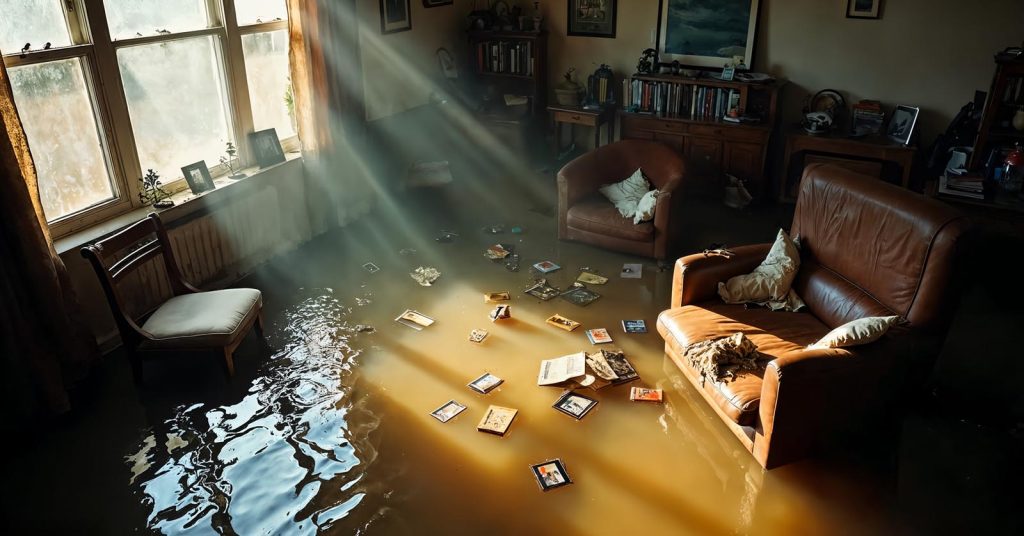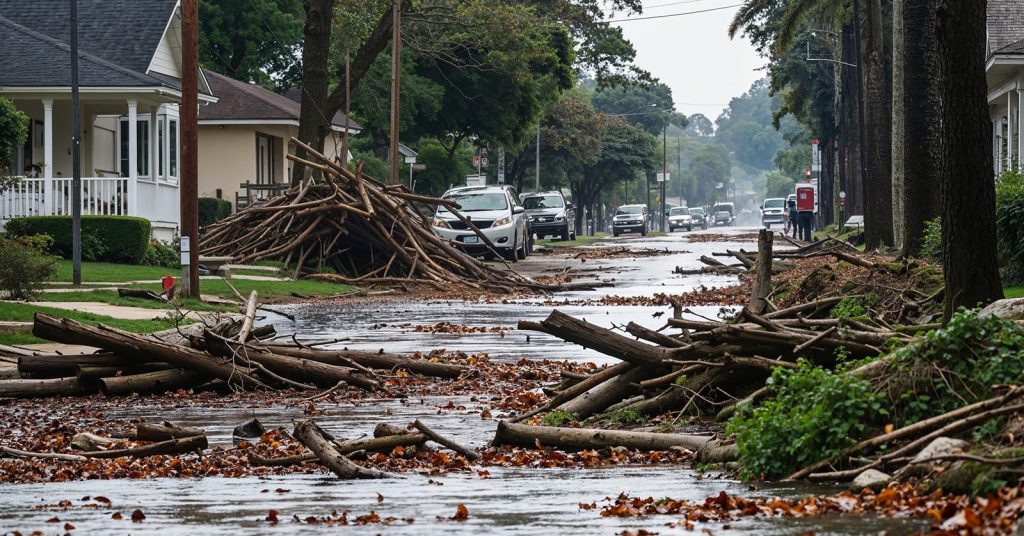
Hurricane damage can cross the boundaries between homeowners, wind and flood policies in a single event.
One storm can tear shingles from a roof, push seawater through the first floor, knock a tree onto a garage, ruin furniture and force a family into temporary housing. Insurance may treat those losses differently even though they happened during the same hurricane.
That makes hurricane preparation less about finding a policy with “hurricane” in the name and more about making sure the major causes of loss fit together without an expensive gap.
What Does “Hurricane Insurance” Actually Mean?
For most homeowners, hurricane protection is assembled from several types of property coverage rather than one standardized nationwide hurricane policy.
Several coverages may need to work together:
| Type of damage | Coverage that may respond |
|---|---|
| Wind damages the house | Homeowners insurance or separate windstorm/wind-and-hail coverage |
| Wind-driven rain enters through a storm-created opening | Homeowners or wind coverage, subject to policy terms |
| Storm surge or other external flooding | Separate flood insurance |
| Belongings damaged by covered wind | Homeowners or applicable wind policy |
| Belongings damaged by floodwater | Flood contents coverage, if purchased |
| Temporary living costs after covered wind damage | Homeowners coverage may apply |
| Temporary living costs after flood-only damage | Depends on the flood policy; standard NFIP policies do not provide additional living expense coverage |
The result depends on the policies you bought, their exclusions and endorsements, state rules, and what actually caused the damage.
Does Homeowners Insurance Cover Hurricane Wind Damage?
Often, but not everywhere.
Wind is a commonly insured homeowners peril. A typical policy may therefore cover damage when hurricane winds tear off roofing, damage siding, break covered structures, or cause a tree to fall onto the home.
But coastal and catastrophe-exposed markets can treat wind differently.
Homeowners outside the Texas coast probably have wind and hail in their homeowners policy, while some coastal homeowners need a separate windstorm policy. Many eligible coastal properties obtain that protection through the Texas Windstorm Insurance Association when private homeowners coverage excludes wind and hail.
Other states have their own coastal insurance arrangements and rules.
Do not assume that the word homeowners on the declarations page means hurricane wind is included. Look specifically for:
- Windstorm coverage
- Wind and hail exclusions
- Hurricane or named-storm endorsements
- Separate windstorm policies
- Wind/hail, hurricane, or named-storm deductibles
If the roof is your main concern, roof damage and leaks require a closer look at wind, hail, age, depreciation and roof-specific policy terms.
Storm Surge and Flooding Are a Different Coverage Problem
One of the most important hurricane insurance gaps is flood.
Most homeowners insurance does not cover flood damage. Under the NFIP, storm surge and other qualifying water accumulation on normally dry land can fall within the policy definition of flood.
That means hurricane wind and hurricane water can produce different claims.
NFIP flood policies for homeowners can provide up to $250,000 of building coverage and up to $100,000 of contents coverage. Building and contents coverage are purchased separately and have separate deductibles.
Private flood insurance is another option in some markets and can use different limits and policy terms.
The distinction between flood and homeowners insurance matters because NFIP limits, basement restrictions, waiting periods and temporary-living coverage differ from a standard homeowners policy.
Hurricane, Named-Storm, and Wind Deductibles Are Not the Same Thing
Your deductible that applies to hurricane damage may be different from the deductible shown most prominently for ordinary homeowners claims.
Named-storm and hurricane deductibles can be structured in several ways:
- Hurricane deductible: triggered by hurricane losses under the policy and applicable state rules
- Named-storm deductible: can apply more broadly to qualifying named tropical storms, hurricanes, or other named events
- Windstorm or wind/hail deductible: can apply to wind or hail losses even when the event is not a hurricane
These special storm deductibles are not limited to one region. As of June 2025, NAIC reported that 19 states and the District of Columbia had some form of hurricane or named-storm deductible in place; other states can also permit special catastrophe deductibles.
Deductible triggers are critical. State laws are not identical, and insurer contract language can differ.
A hurricane deductible may therefore start and stop under rules that are very different from a named-storm deductible in another state.
Percentage Deductibles Can Be Large
Special catastrophe deductibles are often expressed as a percentage of the home’s insured value.
$500,000 dwelling limit × 5% hurricane deductible = $25,000
Five percent usually refers to the insured value specified by the policy, not 5% of a $40,000 repair bill. Under this simplified example, the deductible itself is $25,000.
Percentage-based deductibles are more common for named-storm and hurricane losses, although fixed-dollar versions also exist. Current market data cited by NAIC show percentages ranging from about 1% to as high as 15%, depending on the market and policy.
Catastrophe-specific percentage homeowners insurance deductibles can leave a much larger out-of-pocket amount than a standard flat deductible.
Florida Shows Why State Rules Matter
One useful state example comes from Florida because its hurricane deductible is defined by state law rather than simply by whatever an insurer chooses to call a storm.
Under Florida law, hurricane coverage concerns windstorm damage during a storm declared a hurricane by the National Hurricane Center. Its statutory hurricane period begins when a hurricane warning is issued for any part of Florida and ends 72 hours after the final hurricane watch or warning is terminated.
A calendar-year hurricane deductible structure also applies to qualifying Florida personal residential policies.
For covered hurricane losses under policies issued by the same insurer or insurer group, the hurricane deductible generally applies on an annual basis. After a prior hurricane loss in the same calendar year, a later hurricane can involve the remaining hurricane deductible or the ordinary deductible, as specified by the statute.
State law also requires Florida insurers, subject to statutory exceptions, to offer certain hurricane deductible options. The current statute includes $500, 2%, 5%, and 10% alternatives in specified circumstances, with exceptions based on dwelling limits and other conditions.
What Can Still Be Uncovered After a Hurricane?
Having homeowners insurance, wind coverage, and flood insurance can close major gaps, but it does not mean every hurricane-related expense is insured.
Potential gaps can include:
- Damage below the applicable deductible
- Wind when the homeowners policy excludes it and no separate wind policy was purchased
- Flooding when no flood policy is in force
- Amounts above policy limits
- Wear, deterioration, or pre-existing damage
- Items subject to special limits or exclusions
- Landscaping, fences, pools, or detached property when coverage is limited
- Vehicles, which generally require applicable auto coverage
- Temporary living costs that are not covered by the policy responding to the loss
Cause-of-loss disputes can also matter when wind and flood occur close together. Documenting the condition of the home before a storm and the damage afterward can help establish what happened.
Which Policies Might a Coastal Homeowner Need?
Homeowners exposed to hurricane risk should verify the coverage structure rather than assume one particular combination applies everywhere.
A practical review looks like this:
| Question | What to verify |
|---|---|
| Is the home insured? | Homeowners or appropriate residential property policy |
| Is hurricane wind included? | Check the homeowners policy for wind/hail coverage or exclusion |
| If wind is excluded, what replaces it? | Separate private or state-market windstorm coverage where available |
| Is external flooding insured? | NFIP or private flood insurance |
| Which catastrophe deductible applies? | Hurricane, named-storm, wind/hail, or another applicable deductible |
| Can the deductible be funded? | Convert the percentage into dollars and compare it with available savings |
| Are limits sufficient? | Review dwelling reconstruction, belongings, loss of use, and flood limits separately |
This is also why shopping purely by premium can be misleading. Two homeowners policies can have similar annual prices but very different wind exclusions or catastrophe deductibles.
Normalize limits, deductibles and major exclusions when shopping for homeowners insurance so price comparisons reflect similar protection.
Do Not Wait for a Hurricane Warning to Buy Coverage
Insurance is much easier to arrange before a storm threatens the area.
NFIP flood policies typically have a 30-day waiting period before new coverage becomes effective, with specific exceptions including certain mortgage transactions and qualifying map revisions.
Wind coverage can have its own restrictions.
TWIA coverage is subject to binding restrictions once a hurricane is already in the Gulf of Mexico, which is one reason coastal wind protection should be arranged before a storm is approaching.
Private insurers can also restrict new business or policy changes when a storm is approaching, subject to applicable law and company rules.
The practical timing rule is simple: review hurricane protection during normal weather, not when a named storm is already approaching.
What to Do After Hurricane Damage
Once it is safe to return to the property:
- Protect people first. Avoid floodwater, unstable structures, damaged electrical systems, downed power lines, and other hazards.
- Photograph damage. Capture exterior, interior, roof, water levels, debris, damaged belongings, and surrounding conditions where safe.
- Prevent additional damage. Make reasonable temporary repairs when safe and keep receipts.
- Identify likely causes. Separate visible wind damage from flood or storm-surge damage as much as reasonably possible.
- Notify the appropriate insurers. Hurricane can require separate homeowners/wind and flood claims.
- Keep damaged-property records. Follow insurer instructions before discarding items unless keeping them would be unsafe or unsanitary.
- Track expenses and communications. Save receipts, estimates, claim numbers, photos, emails, and adjuster documents.
Do not assume the first check is the final settlement. Replacement-cost claims can be paid in stages, and different policies may use different documentation requirements.
The same documentation, mitigation and communication principles used when filing a homeowners claim apply after hurricane damage.
Hurricane Insurance Checklist
Before hurricane season, answer these questions from the actual policy documents:
- Does my homeowners policy cover wind and hail?
- Do I need a separate windstorm policy?
- Do I have flood insurance?
- What triggers my hurricane or named-storm deductible?
- What is that deductible in dollars?
- Do I have enough cash to fund it?
- Is the roof replacement cost or actual cash value?
- Are dwelling and contents limits adequate?
- How much loss-of-use coverage do I have?
- When does each of my policies renew?
- Are my home inventory and pre-storm photos current?
Policy coordination is the most important test. Your home can be well insured against hurricane wind and still have a six-figure flood gap—or have both coverages but a deductible the household could not realistically fund.
Frequently Asked Questions (FAQs)
Is hurricane insurance a separate policy?
Not necessarily. Usually, the phrase describes a combination of coverage. Hurricane wind may be included in homeowners insurance or require separate windstorm coverage, while storm surge and other flooding generally require separate flood insurance.
Does homeowners insurance cover hurricane damage?
Qualifying wind damage is often covered, but policies can exclude wind or hail in some coastal markets. Homeowners insurance generally does not cover external flooding or storm surge.
Does flood insurance cover hurricane storm surge?
Flood insurance can cover qualifying direct physical flood damage caused by storm surge, subject to the policy definition, limits, deductibles, and exclusions.
What is a hurricane deductible?
Application begins when the policy’s hurricane trigger is met. Percentage form is common and can produce a much larger deductible than an ordinary flat amount.
What is the difference between a hurricane deductible and a named-storm deductible?
Trigger scope differs: a named-storm deductible may apply to a broader set of tropical weather events than a hurricane deductible. Exact definitions and triggers depend on state law and policy language.
How much is a 5% hurricane deductible?
Your dollar deductible depends on the insured value to which the percentage applies. Applying 5% to $500,000 of dwelling coverage produces a $25,000 deductible.
Do you pay a hurricane deductible for every hurricane?
State law and policy wording control the answer. Florida personal residential policies subject to its statute use a calendar-year hurricane deductible structure, but that should not be generalized nationwide.
Can I buy hurricane coverage when a storm is already approaching?
Do not count on it. NFIP flood insurance generally has a 30-day waiting period with specified exceptions, and insurers or wind pools can restrict new coverage when a storm threatens an area.
Sources
- National Association of Insurance Commissioners: Hurricane Deductibles
- National Flood Insurance Program: What Is a Flood?
- National Flood Insurance Program: Buy a Flood Insurance Policy
- National Flood Insurance Program: Flood Insurance 101
- Texas Department of Insurance: What Is Windstorm Insurance?, updated June 2026
- Florida Department of Financial Services: Florida’s Hurricane Deductible
- Florida Legislature: 2026 Florida Statutes § 627.4025
- Florida Legislature: 2026 Florida Statutes § 627.701