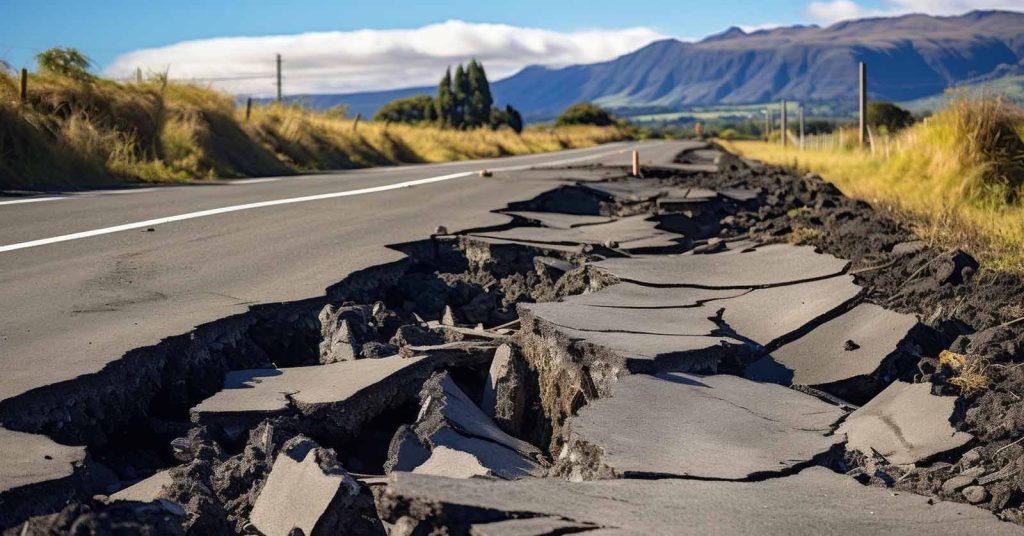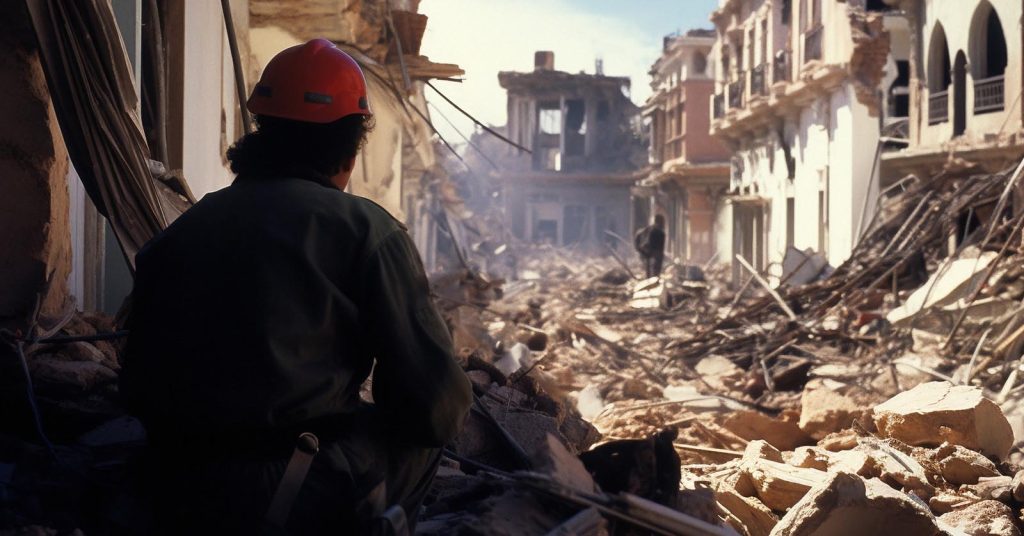
An earthquake policy is unusual because the question is rarely whether the potential loss could be large. Severe shaking can damage the foundation, frame, walls, utilities and contents of a home at the same time.
More difficult is deciding whether the probability and financial exposure justify a separate premium for coverage that can carry a five-figure deductible. Deciding whether to buy earthquake insurance requires looking at the earthquake risk, the structure and your finances together.
Does Homeowners Insurance Cover Earthquakes?
Standard homeowners insurance generally excludes direct earthquake and earth-movement damage.
Catastrophic earthquake damage is not covered by a standard homeowners policy. Coverage is typically available through a separate earthquake policy or an endorsement to another property policy.
An HO-3 or HO-5 policy can therefore be broad in many other ways and still leave earthquake shaking outside the contract. “Open peril” does not mean every cause of loss is insured; exclusions still apply.
Even broad policy forms retain important homeowners insurance exclusions, including common gaps for earthquake, flood and deterioration.
A resulting covered peril can be treated differently from the earthquake itself.
Do not assume every chain of events will be divided the same way. Cause of damage and wording in both policies determine which insurer responds.
What Does Earthquake Insurance Cover?
Separate earthquake coverage is designed primarily for direct physical damage caused by earthquake shaking.
A separate earthquake policy can protect the home and other insured property against earthquake damage. Specific policies differ, but the main coverage categories commonly include:
| Coverage | What it can pay for |
|---|---|
| Dwelling | Repairing or rebuilding covered structural earthquake damage |
| Personal property | Repairing or replacing covered belongings damaged by earthquake shaking |
| Loss of use | Qualifying additional living expenses when covered earthquake damage makes the home uninhabitable |
| Emergency repairs | Reasonable measures to protect covered property from additional earthquake damage when included |
| Other structures | Detached structures when the policy includes or offers this protection |
Do not assume the earthquake policy simply duplicates homeowners Coverages A–F. Policy designs vary, including their limits, deductibles and restrictions.
Dwelling Coverage
For homeowners, dwelling protection is usually the central part of an earthquake policy because it funds repair or rebuilding after covered structural damage.
Check whether the dwelling limit tracks the reconstruction amount on your homeowners policy and whether extensions, foundations or other structural components receive the protection you expect.
Some earthquake policies place special limits or exclusions on items such as masonry veneer, chimneys, swimming pools, landscaping, retaining walls or other property. Those restrictions vary, so read the policy rather than relying on a generic coverage list.
Personal Property
Personal-property coverage can protect furniture, clothing, electronics and other covered belongings damaged by earthquake shaking.
Look at the actual limit rather than assuming it equals the contents limit on your homeowners policy. Valuable or fragile property can have special limits or exclusions.
Loss of Use
If covered earthquake damage makes the home uninhabitable, loss-of-use coverage can help with qualifying additional living expenses such as temporary housing.
Loss-of-use coverage can be especially valuable after a severe quake because structural inspections, infrastructure disruptions and contractor shortages can extend the period before a home is safe to occupy.
However, loss-of-use limits and deductibles vary by policy.
What Earthquake Insurance May Not Cover
Earthquake insurance is not an all-disaster policy.
Coverage generally focuses on direct damage from earthquake shaking rather than duplicating protection already provided by the homeowners policy. Exact division of coverage depends on the contracts involved.
Policy exclusions or restrictions can apply to:
- Fire following an earthquake when the homeowners policy covers the fire
- Flooding or tsunami-related water damage
- Sewer or drain backup
- Vehicles
- Land, landscaping, trees and plants
- Swimming pools and spas
- Fences and certain detached structures
- Exterior masonry or veneer
- Some fragile or high-value personal property
- Pre-existing damage
- Wear and tear, deterioration or neglect
Keeping earthquake and flood coverage separate is particularly important.
If an earthquake contributes to a tsunami, lake overflow or another qualifying external flood, the earthquake policy generally does not become flood insurance. Separate flood coverage may be needed for the water damage.
Earthquake Deductibles Can Be Much Larger Than Home Deductibles
Your deductible is one of the most important reasons an earthquake policy can look stronger on paper than it feels after a moderate claim.
Deductibles are commonly expressed as a percentage of the insured value rather than as a simple dollar amount.
Percentage-based deductibles can vary widely by insurer and policy. Current NAIC consumer guidance cites a range of roughly 2% to 20% of insured property value, although individual markets and policies can fall outside that range.
$500,000 dwelling limit × 15% deductible = $75,000
With a 15% deductible, the percentage usually applies to an insured limit rather than to the repair bill itself. If the policy bases the deductible on a $500,000 dwelling limit, the deductible is $75,000 under that simplified example.
Policies can also handle dwelling, contents and other coverages differently, and separate deductibles may apply depending on the contract.
Percentage deductibles make earthquake coverage fundamentally different from choosing between a $1,000 and $2,500 ordinary homeowners deductible.
California CEA Deductibles: A Current Example
California provides a useful example of how much earthquake insurance products can vary.
CEA’s current homeowners options offer dwelling deductibles of 5%, 10%, 15%, 20% or 25%, although some lower-deductible choices are unavailable for certain high-value or older unretrofitted homes. Its Standard Homeowners and Homeowners Choice products also use different coverage structures.
Loss-of-use coverage under current CEA homeowners policies has no deductible.
These are California-specific CEA terms, not nationwide defaults.
Who Should Consider Earthquake Insurance?
No nationwide seismic-hazard threshold determines who should buy earthquake insurance.
Four questions make the purchase decision more useful.
1. How Much Earthquake Hazard Exists Where You Live?
The West Coast receives much of the attention, but earthquake hazard is not limited to California.
USGS’s latest National Seismic Hazard Model found that nearly 75% of the United States could experience potentially damaging earthquake shaking. Thirty-seven states have experienced an earthquake above magnitude 5 during the last 200 years.
Distance from the nearest fault is not enough to measure earthquake risk. State-by-state seismic information and national hazard maps can provide better context because ground shaking also depends on soil, geology and other regional factors.
Areas with significant hazard include parts of:
- California
- Alaska
- Washington and Oregon
- Nevada and Utah
- Hawaii
- The New Madrid region in the central U.S.
- Parts of the central and eastern United States with known seismic zones
Such a list is not a ranking and does not replace the USGS hazard information for a specific location.
2. How Vulnerable Is the House?
Two neighboring homes can experience the same shaking and suffer very different damage.
Construction characteristics can materially affect vulnerability. Factors worth investigating include:
- Age of the home
- Whether the house is adequately anchored to its foundation
- Raised or cripple-wall foundations
- Unreinforced masonry
- Living space above a garage or other soft-story configuration
- Hillside construction
- Heavy chimneys or masonry features
- Previous seismic retrofit work
A qualified structural professional can evaluate vulnerabilities that an insurance quote cannot.
3. Could You Absorb the Loss Yourself?
Buying coverage becomes more compelling when a severe uninsured loss would threaten the household’s finances.
Consider:
- How much it would cost to repair or rebuild the home
- How much home equity is at risk
- How much cash and liquid savings you could use after a disaster
- Whether you could carry both housing costs and major repair debt
- How much personal property you could afford to replace
- Whether temporary housing would strain the budget
Homeowners with substantial liquid assets may decide to self-insure more earthquake risk. By contrast, homeowners with limited savings and significant equity can reach the opposite conclusion even if the premium feels expensive.
4. Could You Afford the Deductible?
Insurance does not eliminate the need for earthquake savings.
If a $500,000 home has a $75,000 earthquake deductible, the household still needs a plan for that retained loss.
Compare the deductible with:
- Emergency savings
- Available credit
- Expected repair needs after a moderate quake
- The amount of damage required before the policy begins producing meaningful value
Even a policy with a deductible you could never fund may still protect against a catastrophic total loss, but it will behave very differently from ordinary first-dollar coverage.
Do Not Rely on Federal Disaster Aid Instead
Federal disaster assistance can help after a presidentially declared disaster, but it is not a replacement for property insurance.
FEMA’s Individuals and Households Program can help eligible households with certain uninsured or underinsured necessary expenses and serious needs, but it is not designed to compensate for every disaster loss.
Homeowners may also be eligible for SBA disaster loans after qualifying declared disasters. Current 2026 program limits allow eligible homeowners to apply for up to $500,000 to repair or replace a primary residence, while renters or homeowners may be eligible for up to $100,000 for personal property.
A loan is debt, not an insurance settlement.
Government assistance also depends on the disaster declaration, eligibility and program rules. It should not be treated as a guaranteed source of full rebuilding funds when deciding whether to insure a six-figure earthquake exposure.
How to Compare Earthquake Insurance Policies
Comparing quotes requires more than looking at premium because deductibles, limits and exclusions also move.
Line up the following before choosing a policy:
- Dwelling limit: Does it reflect a credible rebuilding amount?
- Dwelling deductible: Convert the percentage into dollars.
- Personal-property limit: Is it enough for the belongings you want insured?
- Personal-property deductible: Is it separate from the dwelling deductible?
- Loss-of-use limit: How much temporary housing protection is available?
- Other structures: Are detached garages, sheds or other structures covered?
- Building-code coverage: How are required upgrades treated?
- Masonry and fragile property: Look for exclusions or special limits.
- Emergency repairs: Check whether immediate protective work receives coverage.
- Seismic-event definition: Determine how the policy treats aftershocks and multiple earthquakes.
Then compare price, including the factors behind earthquake insurance costs, the deductible structure and the amount of risk you would still retain.
Do not compare a 5% deductible quote with a 20% deductible quote as though the cheaper premium is the only difference.
Retrofitting Can Reduce the Risk Even if You Buy Insurance
Insurance transfers financial risk. A seismic retrofit tries to reduce the physical damage in the first place.
Earthquake mitigation should address the building’s actual vulnerabilities. Depending on the home, work can involve foundation anchoring, bracing cripple walls, strengthening soft-story configurations or securing components that can fail during shaking.
California Earthquake Authority currently offers qualifying older wood-frame homeowners premium discounts of up to 25% when eligible seismic retrofit requirements are met.
CEA’s eligibility rules are specific to California and particular construction types, but the broader lesson applies nationally: ask whether your insurer recognizes verified mitigation and whether a structural professional recommends retrofitting the house.
Mitigation and insurance are complements, not substitutes. Structural improvements can reduce the size of a loss; insurance can protect the household when the remaining loss is still too large to absorb.
Frequently Asked Questions (FAQs)
Does homeowners insurance cover earthquake damage?
Standard homeowners insurance generally excludes direct damage caused by earthquake shaking. Earthquake coverage normally requires a separate policy or endorsement.
What does earthquake insurance usually cover?
Coverage commonly includes earthquake damage to the dwelling and can include personal property and additional living expenses. Other structures, emergency repairs and additional features depend on the policy.
Does earthquake insurance cover fire after an earthquake?
Fire is commonly covered by homeowners insurance even when an earthquake starts it, so earthquake policies typically do not duplicate that coverage. The specific cause and policy language control the claim.
Does earthquake insurance cover tsunami or flood damage?
Generally not. External flooding requires flood coverage. An earthquake policy should not be assumed to cover water damage simply because an earthquake contributed to the event.
How does an earthquake insurance deductible work?
It is commonly a percentage of the insured value rather than a percentage of the repair bill. For example, a 15% deductible applied to $500,000 of dwelling coverage equals $75,000.
Do you need earthquake insurance if you do not live in California?
Possibly. Seismic exposure is not confined to the West; USGS estimates that nearly 75% of the United States could experience potentially damaging shaking. Check the seismic hazard for your actual location, the vulnerability of your home and your ability to absorb a major uninsured loss.
Is earthquake insurance worth it?
Buying coverage can make sense when earthquake hazard and potential loss are substantial relative to your savings. Compare the annual premium and deductible with the financial damage a severe uninsured quake could cause rather than judging the policy on premium alone.
Can FEMA pay to rebuild my house after an earthquake?
Federal assistance may be available after a qualifying declared disaster, but it is not a substitute for insurance and is not designed to compensate for every loss. SBA disaster assistance can include loans, which must be repaid.
Sources
- National Association of Insurance Commissioners: Earthquake Insurance
- National Association of Insurance Commissioners: What Are Earthquake Deductibles?
- National Association of Insurance Commissioners: What Should You Do Before and After an Earthquake?
- U.S. Geological Survey: New USGS Map Shows Where Damaging Earthquakes Are Most Likely to Occur in the U.S.
- U.S. Geological Survey: What Are the Earthquake Hazards and Risks Where I Live?, updated July 2026
- California Earthquake Authority: Homeowners Policy Coverages and Deductibles
- California Earthquake Authority: Earthquake Insurance Premium Discounts
- Federal Emergency Management Agency: Individuals and Households Program Overview
- U.S. Small Business Administration: Physical Damage Disaster Loans